التصنيف / الأسماء
الأسماء الشائعة | مرادفات | Catalog of Fishes(جنس, الانواع) | ITIS | CoL | WoRMS | Cloffa
>
Perciformes/Percoidei (Perchs) >
Percidae (Perches) > Etheostomatinae
Etymology: Etheostoma: Greek, etheo = to strain + Greek, stoma = mouth; Rafinesque said "various mouths", but Jordan and Evermann suggest the name might have been intended as "Heterostoma (Ref. 45335); erythrozonum: The name erythrozonum is derived from Greek: erythros, red, and zona, zone. This name is in reference to the red-orange stripe and lateral red-orange blotches characteristic of this species, and the name is
in keeping with the names.
البيئة: الوسط / المنطقة المناخية / نطاق العمق / نطاق التوزيع
البيئة
; المياه العذبة قاعية التغذية و المعيشة. Temperate; 39°N - 37°N, 90°W - 92°W
North America: USA. Etheostoma erythrozonum is restricted to the Meramec River drainage of Missouri. It is widely distributed within the Meramec River drainage, known from the main channel of the Meramec River in St. Louis County and upstream into larger tributaries. It is generally absent from small headwater streams (Ref. 80465).
الحجم / وزن / العمر
النضج: Lm ? range ? - ? cm
Max length : 7.1 cm SL ذكر/ مختلط الجنس; (Ref. 80865)
وصف مختصر
مفاتيح التعريف | الوصف الخارجي | قياسات المظهر الخارجي
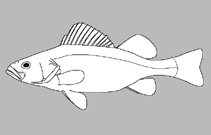
Etheostoma erythrozonum is a relatively large, stout-bodied species of Etheostoma.
Dorsal-fin spines (11–14, modally 13), dorsal-fin rays (12–14, modally 13), anal-fin rays (8–10, modally 9), principal caudal rays (16–18, modally 17), pectoral-fin rays (15–17, modally 16), lateral-line scales (39–55, modally 50), cheek scales absent, opercle partially scaled (0–9 scales, modally 5), breast partially to completely scaled, nape completely scaled. Both males and females of this species have four prominent dark saddles on the back and dorsal sides, with the sides angled obliquely forward. The background color is dusky in the dorsal region, lighter in the sublateral region and white on the belly. Along the sides is a series of sub-lateral dark blotches. There is a dark
preorbital bar extending forward and a dark suborbital bar extending down the cheek. This species exhibits extreme sexual dimorphism in nuptial color patterns.
Body shape (shape guide): elongated.
Etheostoma erythrozonum is one of the most abundant darters within its range; its conservation status is currently considered stable (Ref. 49982 and Ref. 80865).
دورة الحياة وسلوك التزاوج
النضج | التكاثر | وضع البيض | بيض | الخصوبة | اليرقات
Switzer, J.F. and R.M. Wood, 2009. Etheostoma erythrozonum, a new species of darter (Teleostei: Percidae) from the Meramec River drainage, Missouri. Zootaxa 2095:1-7. (Ref. 80865)
حالة القائمة الحمراء للاتحاد الدولي لحفظ الطبيعة والموارد الطبيعية (Ref. 130435: Version 2025-2 (Global))
استخدامات بشرية
أدوات
تقارير خاصة
تنزيل XML
مصادر علي الأنترنت
تقديرات تستند إلى النماذج
مؤشر التنوع الشُعبي الوراثي (مرجع
82804): PD
50 = 0.5000 [Uniqueness, from 0.5 = low to 2.0 = high].
Bayesian length-weight: a=0.00676 (0.00303 - 0.01510), b=3.12 (2.94 - 3.30), in cm total length, based on LWR estimates for this Genus-body shape (Ref.
93245).
مستوى غذائي (مرجع
69278): 3.3 ±0.5 se; based on size and trophs of closest relatives
المرونه (مرجع
120179): عالي, الحد الزمني الأدني لتضاعف عدد أفراد المجتمع أقل من 15 شهر (Preliminary K or Fecundity.).
ضعف الصيد (Ref.
59153): Low vulnerability (10 of 100).
🛈