Élasmobranches (requins et raies) (sharks and rays) >
Squatiniformes (Angel sharks) >
Squatinidae (Angel sharks)
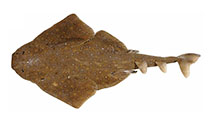
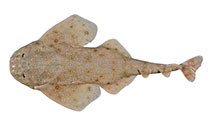
Etymology: Squatina: Latin for skate, which angel sharks superficially resemble, presumably tautonymous with Squalus squatina Linnaeus 1758 (no species mentioned) (See ETYFish); albipunctata: albus (L.), white; punctatus (L.), spotted, referring to distinctive white-spotted color pattern (See ETYFish).
More on authors: Last & White.
Environnement : milieu / zone climatique / profondeur / gamme de distribution
Écologie
marin benthopélagique; profondeur 37 - 415 m (Ref. 74939). Tropical; 17°S - 38°S
Distribution
Territoires | Zones FAO | Écosystèmes | Occurrences | Carte par point | Introductions | Faunafri
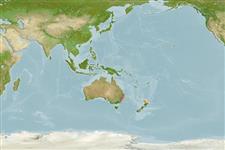
Pacific: Australia. Occurs off eastern Australia between Cairns, Queensland and Lakes Entrance, Victoria (Ref. 74939).
Taille / Poids / Âge
Maturité: Lm ? range ? - ? cm
Max length : 98.5 cm TL mâle / non sexé; (Ref. 74939); 56.6 cm TL (female); poids max. publié: 17.0 kg (Ref. 118750)
Description synthétique
Clés d'identification | Morphologie | Morphométrie
Vertèbres: 134 - 139. Body robust, strongly depressed anteriorly, firm. Trunk similarly depressed, almost ray-like,
deepest over abdomen. Not tapering abruptly at pelvic-fin insertion, tail strongly depressed, even at origin of caudal fin. Abdomen moderately elongate. Head broad, extended laterally, strongly depressed; oval in cross-section; Pectoral fins very large, expanded, base very fleshy; Pelvic fins large, elongate; Dorsal fins similar in size and shape, somewhat upright, close together; Dermal denticles densely covering entire dorsal surface of body (Ref. 74939).
Body shape (shape guide): other; Cross section: flattened.
Cycle de vie et comportement reproducteur
Maturité | Reproduction | Frai | Œufs | Fécondité | Larves
Last, P.R. and W.T. White, 2008. Three new angel sharks (Chondrichthyes:Squatinidae) from the Indo-Australian region. Zootaxa 1734:1-26. (Ref. 74939)
Statut dans la liste rouge de l'IUCN (Ref. 130435: Version 2025-2 (Global))
Menace pour l'homme
Harmless
Utilisations par l'homme
Outils
Articles particuliers
Télécharger en XML
Sources Internet
Estimations basées sur des modèles
Température préférée (Réf.
123201): 14.1 - 20.3, mean 15.8 °C (based on 15 cells).
Indice de diversité phylogénétique (Réf.
82804): PD
50 = 0.5000 [Uniqueness, from 0.5 = low to 2.0 = high].
Bayesian length-weight: a=0.00661 (0.00287 - 0.01523), b=3.07 (2.88 - 3.26), in cm total length, based on LWR estimates for this Genus-body shape (Ref.
93245).
Niveau trophique (Réf.
69278): 4.0 ±0.6 se; based on size and trophs of closest relatives
Résilience (Réf.
120179): Faible, temps minimum de doublement de population : 4,5 à 14 années (Preliminary low fecundity).
Vulnérabilité de la pêche (Ref.
59153): High vulnerability (59 of 100).
🛈