>
Ophidiiformes (Cusk eels) >
Dinematichthyidae (Viviparous brotula)
Etymology: Diancistrus: Greek, di = two + Greek, agkistron = hook (Ref. 45335); altidorsalis: Name from Latin 'altus' meaning high and 'dorsalis' meaning neck, referring to its high-necked profile.
More on authors: Schwarzhans, Møller & Nielsen.
Milieu: milieu / Klimaatzone / Diepte / verspreidingsgebied
Ecologie
marien rifbewoner; diepte 15 - 20 m (Ref. 57884). Tropical
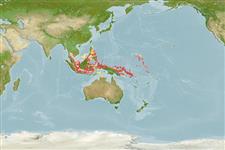
Western Pacific: Indonesia, New Guinea, Sabah to the Solomons, including Sta. Cruz Islands.
Grootte / Gewicht / Leeftijd
Maturiteit: Lm ? range ? - ? cm
Max length : 10.2 cm SL mannelijk / geslacht onbekend; (Ref. 57884)
Korte beschrijving
Determinatiesleutels | Morfologie | Morfometrie
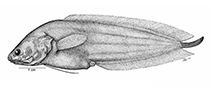
Dorsale zachte stralen (totaal) : 76 - 85; Anale zachte stralen: 59 - 68; Wervels: 43 - 45. Diagnosis: Vertebrae 11+32-34=43-45, dorsal fin rays 76-85, anal fin rays 59-68; eyes large (at least 2.5% SL); outer pseudoclasper large, broad, ear-lobe shaped; inner pseudoclasper a fleshy appendix at the anterior-inner rim of the outer pseudoclasper, without supporter; large scale patch on operculum above opercular spine (6–9 scales) and 1 to 3 isolated scales below opercular spine; head profile strongly ‘high-necked / hump-backed’; color yellow in live specimens (Ref. 57884).
Body shape (shape guide): elongated; Cross section: compressed.
Large dominating individuals were observed to make attacks toward smaller fish, which were hiding below rocks or any other shelter provided. One male was observed to flip backward the cover of the copulatory organ so that the organ can be exposed while swimming (Ref. 57884). Solitary inhabitant of coral reef crevices to at least 20m depth, cryptic (Ref 90102).
Levenscyclus en paargedrag
Maturiteit | Voortplanting | Paaien | Eieren | Fecunditeit | Larven
Schwarzhans, W., P.R. Møller and J.G. Nielsen, 2005. Review of the Dinematichthyini (Teleostei, Bythitidae) of the Indo-West-Pacific. Part I. Diancistrus and two new genera with 26 new species. The Beagle, Records of the Museum and Art Galleries of the Northern Territory 21:73-163. (Ref. 57884)
Status op de Rode Lijst van het IUCN (Ref. 130435: Version 2025-2 (Global))
Gevaar voor de mens
Harmless
Gebruik door de mens
Visserij: van potentieel belang
Tools
Speciale rapporten
Download XML
Internetbronnen
Schattingen op basis van modellen
Gewenste temperatuur (Ref.
123201): 27.9 - 29.3, mean 28.8 °C (based on 1452 cells).
Fylogenetische diversiteitsindex (Ref.
82804): PD
50 = 0.5000 [Uniqueness, from 0.5 = low to 2.0 = high].
Bayesian length-weight: a=0.00389 (0.00180 - 0.00842), b=3.12 (2.94 - 3.30), in cm total length, based on all LWR estimates for this body shape (Ref.
93245).
Trofisch niveau (Ref.
69278): 3.4 ±0.5 se; based on size and trophs of closest relatives
Kwetsbaarheid van de visserij (Ref.
59153): Low vulnerability (10 of 100).
🛈