>
Cypriniformes (Carps) >
Balitoridae (River loaches)
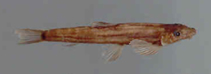
Etymology: Ghatsa: Named after the Western Ghats of India where species of this genus appears to be endemic; santhamparaiensis: Named after the type locality, Santhamparai.
Entorno: milieu / zona climática / rango de profundidad / gama de distribución
Ecología
; agua dulce demersal. Tropical
Asia: India.
Tamaño / Peso / Edad
Madurez: Lm ? range ? - ? cm
Max length : 6.1 cm SL macho / no sexado; (Ref. 47923)
Descripción breve
Claves de identificación | Morfología | Morfometría
Espinas dorsales (total) : 2; Radios blandos dorsales (total) : 9; Espinas anales: 3; Radios blandos anales: 5. Dorsal fin origin behind the origin of the pelvic fin and inserted nearer to the caudal fin base than to the tip of the snout; pectoral fin with 4 simple and 10 branched rays; rostral barbels unequal in size, first pair shorter than second pair; lateral line with 88-95 scales; body dark brown with 8-9 blotches on dorsal surface; ventral surface anterior to anal fin yellow and remainfer brown (Ref. 47923).
Body shape (shape guide): elongated.
Hides under bedrock undercuts and edges of boulders (Ref. 47923). Temperature 17 ° C (Ref. 47923).
Ciclo vital y comportamiento de apareamiento
Madurez | Reproducción | Puesta | Huevos | Fecundidad | Larva
Arunachalam, M., J.A. Johnson and K. Rema Devi, 2002. Homaloptera santhamparaiensis, a new species of balitorid fish (Teleostei: Balitoridae) from western Ghats stream of Kerala, India. Acta Zool. Taiwan.13(1):31-38. (Ref. 47923)
Situación en la Lista Roja de la UICN (Ref. 130435: Version 2025-2 (Global))
Amenaza para el ser humano
Harmless
Usos humanos
Herramientas
Informes especiales
Descargar XML
Fuentes de Internet
Estimaciones basadas en modelos
Índice de diversidad filogenética (Referencia
82804): PD
50 = 0.5312 [Uniqueness, from 0.5 = low to 2.0 = high].
Bayesian length-weight: a=0.00724 (0.00319 - 0.01647), b=3.06 (2.87 - 3.25), in cm total length, based on LWR estimates for this (Sub)family-body shape (Ref.
93245).
Nivel trófico (Referencia
69278): 3.2 ±0.4 se; based on size and trophs of closest relatives
Vulnerabilidad pesquera (Ref.
59153): Low vulnerability (10 of 100).
🛈