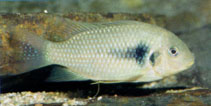
>
Cichliformes (Cichlids, convict blennies) >
Cichlidae (Cichlids) > Incertae sedis
Etymology: nguti: Named for the village Nguti in Southwestern Cameroon where the majority of the type series was collected; noun in apposition (Ref. 49597).
Eponymy: Ethelwynn ‘E T’ Trewavas (1900–1993), British Museum (Natural History). Her “…ground-breaking work on cichlid biology spanned some 60 years,” and her “creativity, humility and kindness are legendary.” (See Ethelwynn & Trewavas) This is a toponym, being the name of a village in southwestern Cameroon where most of the type series was collected. (Ref. 128868), visit book page.
ສະພາບແວດລ້ອມ: ສະພາບແວດລ້ອມ / ເຂດດິນຟ້າອາກາດ / ລະດັບຄວາມເລິກ / ຂອບເຂດການແຈກຢາຍ
ນິເວດວິທະຍາ
; ນ້ຳຈືດ ກ່ຽວກັບ (ຢູ່)ເທິງຊັ້ນພື້ນດິນໃນທະເລເປີດ; ລະດັບຄວາມເລິກ 0 - 2 m (Ref. 49597). Tropical
Africa: only known from the type localities in the region of Nguti in the Mamfue River, a tributary of the upper Cross River, Cameroon (Ref. 52307, 81260).
ຄວາມຍາວໃນການເຕີບໂຕເຕັມຄັ້ງທໍາອິດ / ຂະໜາດ / ນ້ຳໜັກ / ອາຍຸ
ການຈະເລີນເຕັມໄວ: Lm 5.5, range 5 - 6 cm
Max length : 13.3 cm SL ຕົວຜູ້/ບໍ່ມີເພດ; (Ref. 49597); 7.3 cm SL (female)
ຄີ (ໜາມ)ແຂງຢູ່ຫຼັງປາ (ທັງໝົດ) : 15; ຄີຫຼັງຂອງປາ (ຄີອ່ອນ) (ທັງໝົດ) : 10; ຄີ(ໜາມ) ແຂງຢູ່ຄີກົ້ນປາ
ກຸ່ມປາກະດູກແຂງ
ຄວາມຖີ່ຂອງກຸ່ມຖ່າຍທອດພັນ
ປາທີ່ມີການເຄື່ອນຍ້າຍຈາກທະເລໄປຫານ້ຳຈືດ ແລະນ້ຳຈືດຫາທະເລ
ປາທີ່ມີການເຄື່ອນຍ້າຍຈາກທະເລແລະໄປໄຂ່ຢູ່ນ້ຳຈືດ
ຄີກົ້ນຂອງປາ
ສັດທີ່ມີກະດູກສັນຫັຼງ
ການຖ່າຍທອດທາງກຳມະພັນຈາກພໍ່ແມ່ຫາລູກ: 3; ຄີກົ້ນຂອງປາ: 7 - 8; ສັດທີ່ມີກະດູກສັນຫຼັງ: 25. Diagnosis: 2 supraneural bones; scaleless, darkly pigmented blotch on dorsocaudal field of opercle; cuspidate oral jaw dentition; some or all teeth tricuspid in outer row oral dentition (Ref. 49597, 52307). Upper lip with crease (Ref. 49597). Spinous dorsal fin deeply excavated dorsally (Ref. 49597, 52307). Strongly marked oblique black bar anterior on body in preserved specimens; mouth small and slightly inferior (Ref. 49597).
Body shape (shape guide): short and / or deep; Cross section: compressed.
Juveniles were collected with beach seine in the shallow inshore zone in a water depth of few centimeters, adults in deeper water; juveniles prefer shallow water riffles with medium current, while adults congregate around submerged tree branches and rocky outcrops (Ref. 49597). Mainly feeds on detritus, occasionally on insects and plants (Ref. 52307). Delayed uptake, ovophilic (Ref. 81260), larvophilic (Ref. 52307) mouthbrooder (Ref. 52307, 81260) that does not pair-bond (Ref. 52307), spawning in couples over open substrate (Ref. 49597). Female (rarely the male) incubates the fry (Ref. 49597, 52307).
ວົງຈອນຊີວິດ ແລະພຶດຕິກໍາການຫາຄູ່
ການຈະເລີນເຕັມໄວ | ການສືບພັນ | ການວາງໄຂ່ | ໄຂ່ | ຄວາມດົກຂອງໄຂ່ປາ | ຕົວອ່ອນ
Schliewen, U.K. and M.L. Stiassny, 2003. Etia nguti, a new genus and species of cichlid fish from the River Mamfue, Upper Cross River basin in Cameroon, West-Central Africa. Ichthyol. Explor. Freshwat. 14(1):61-71. (Ref. 49597)
ສະຖານະພາບບັນຊີແດງຂອງ IUCN (Ref. 130435: Version 2025-2 (Global))
ໄພຂົ່ມຂູ່ຕໍ່ມະນຸດ
Harmless
ການນໍາໃຊ້ຂອງມະນຸດ
ການປະມົງ: ທີ່ບໍ່ມີຄວາມສົນໃຈ
ເຄື່ອງມື
ບົດລາຍງານພິເສດ
ດາວໂຫລດ XML
ແຫຼ່ງອີນເຕີເນັດ
ການຄາດຄະເນໂດຍອີງໃສ່ແບບຈໍາລອງ
ດັດຊະນີຄວາມຫຼາກຫຼາຍທາງຊີວະພາບ (ເອກະສານອ້າງອີງ
82804): PD
50 = 1.0000 [Uniqueness, from 0.5 = low to 2.0 = high].
Bayesian length-weight: a=0.01995 (0.00906 - 0.04395), b=3.01 (2.83 - 3.19), in cm total length, based on all LWR estimates for this body shape (Ref.
93245).
ຊັ້ນເຂດຮ້ອນ (ເອກະສານອ້າງອີງ
69278): 2.4 ±0.20 se; based on food items.
ຄວາມຢືດຢຸ່ນ (ເອກະສານອ້າງອີງ
120179): ສູງ, ປະຊາກອນຕຳ່ສຸດທີ່ໃຊ້ເວລາສອງໜ້ອຍກວ່າ 15 ເດືອນ (Preliminary K or Fecundity.).
ຄວາມສ່ຽງຕໍ່ການຫາປາ (Ref.
59153): Low vulnerability (10 of 100).
🛈