>
Clupeiformes (Herrings) >
Ehiravidae (River sprats)
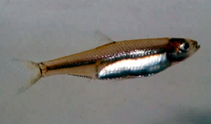
Etymology: Sauvagella: Because of Sauvage, 1860-1880 and 1875-1891; ichtyologist that studied the Ogowe; author of "Histoire naturelle des poissons de Madagascar"; robusta: Named in reference to the deep body of the species, which is evident even in the juvenile specimens (Ref. 33664).
Eponymy: Dr Louis César Henri Ėmile Sauvage (1842–1917) was a French palaeontologist, herpetologist and ichthyologist. [...] (Ref. 128868), visit book page.
Περιβάλλον: περιβάλλον / κλιματική ζώνη / εύρος βάθους / εύρος διανομής
Οικολογία
; Γλυκού νερού Πελαγικό(ά); pH range: ? - 8.3. Tropical
Africa: Sofia River drainage in Madagascar (Ref. 33664, 121308).
Μέγεθος / Βάρος / Ηλικία
Γεννητική Ωρίμανση: Lm ? range ? - ? cm
Max length : 4.7 cm SL αρσενικό/απροσδιόριστο; (Ref. 33664)
Σύντομη περιγραφή
Κλείδες προσδιορισμού | Μορφολογία | Μορφομετρία
Ραχιαίες άκανθες (συνολικά) : 0; Μαλακές ραχιαίες ακτίνες (συνολικά) : 11 - 15; Εδρικές άκανθες: 0; Μαλακές εδρικές ακτίνες: 13 - 17; Σπόνδυλοι: 38 - 40. Diagnosis: Body relatively elongate; belly rounded, without pre-pelvic scutes, but a pelvic scute present with slender lateral arms; gillrakers reduced in number, 15-19 gillrakers on lower limb of first arch; pelvic fin with 1 unbranched and 7 branched finrays, a little anterior to dorsal fin origin; last two anal finrays not separate from others (Ref. 33664). It is distinguished from Sauvagella madagascariensis by lower vertebral number, 38-40 vs. 41-43; deeper body, 20.8-27.4% of standard length vs. 15.8-21.1%; a shorter snout, 18.5-26.6% of head length vs. 26.2-33.7%; and a lower anal fin ray count, 13-17 vs. 17-19 (Ref. 33664).
Body shape (shape guide): elongated; Cross section: compressed.
Found in a river flowing over a rock and sand bed and forming numerous small rapids alternating with quieter pools (Ref. 33664). The apparently restricted distribution of this species combined with ongoing deforestation and erosional situation within the river basin will inevitably increase stress on the habitat rendering the species vulnerable to future decline (Ref. 33664).
Κύκλος ζωής και συμπεριφορά ζευγαρώματος
Γεννητική Ωρίμανση | Αναπαραγωγή | Γεννοβολία | Αβγά | Γονιμότητα | Προνύμφες
Stiassny, M.L.J., 2002. Revision of Sauvagella Bertin (Clupeidae; Pellonulinae; Ehiravini) with a description of a new species from the freshwaters of Madagascar and diagnosis of the Ehiravini. Copeia 2002(1):67-76. (Ref. 33664)
Κατάσταση Κόκκινου Καταλόγου IUCN (Ref. 130435: Version 2025-2 (Global))
Απειλή για τον άνθρωπο
Harmless
Ανθρώπινες χρήσεις
Εργαλεία
Ειδικές εκθέσεις
Λήψη XML
Διαδικτυακές πηγές
Εκτιμήσεις βάσει μοντέλων
Δείκτης φυλογενετικής ποικιλότητας (Αναφ.
82804): PD
50 = 0.7500 [Uniqueness, from 0.5 = low to 2.0 = high].
Bayesian length-weight: a=0.00468 (0.00190 - 0.01153), b=3.03 (2.82 - 3.24), in cm total length, based on LWR estimates for this (Sub)family-body shape (Ref.
93245).
Τροφικό Επίπεδο (Αναφ.
69278): 3.1 ±0.3 se; based on size and trophs of closest relatives
Ελαστικότητα (Αναφ.
120179): Υψηλό, ελάχιστος χρόνος για διπλασιασμό πληθυσμού < 15 μήνες (Preliminary K or Fecundity.).
Ευπάθεια στην αλιεία (Ref.
59153): Low vulnerability (10 of 100).
🛈