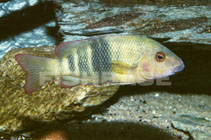
>
Cichliformes (Cichlids, convict blennies) >
Cichlidae (Cichlids) > Etroplinae
Etymology: Paretroplus: Name from the Greek 'para' meaning 'on the side of'; in taxonomy it is commonly used in generic names to express similarity or relatedness; in the present case it would mean 'next to Etroplus' (S.Kullander, pers.comm. 3/11).
Eponymy: Jean Claude Nourissat (1942–2003) was a French cichlid aquarist and collector who risked his life looking for new species in Madagascar, including the Paretroplus (he died from malaria three days after returning from his last trip there). [...] (Ref. 128868), visit book page.
ສະພາບແວດລ້ອມ: ສະພາບແວດລ້ອມ / ເຂດດິນຟ້າອາກາດ / ລະດັບຄວາມເລິກ / ຂອບເຂດການແຈກຢາຍ
ນິເວດວິທະຍາ
; ນ້ຳຈືດ ກ່ຽວກັບ (ຢູ່)ເທິງຊັ້ນພື້ນດິນໃນທະເລເປີດ. Tropical
Africa: Sofia River basin in Madagascar (Ref. 78623).
ຂະໜາດ / ນ້ຳໜັກ / ອາຍຸ
ການຈະເລີນເຕັມໄວ: Lm ? range ? - ? cm
Max length : 15.8 cm SL ຕົວຜູ້/ບໍ່ມີເພດ; (Ref. 78623)
ຄີ (ໜາມ)ແຂງຢູ່ຫຼັງປາ (ທັງໝົດ) : 14 - 16; ຄີຫຼັງຂອງປາ (ຄີອ່ອນ) (ທັງໝົດ) : 12 - 15; ຄີ(ໜາມ) ແຂງຢູ່ຄີກົ້ນປາ
ກຸ່ມປາກະດູກແຂງ
ຄວາມຖີ່ຂອງກຸ່ມຖ່າຍທອດພັນ
ປາທີ່ມີການເຄື່ອນຍ້າຍຈາກທະເລໄປຫານ້ຳຈືດ ແລະນ້ຳຈືດຫາທະເລ
ປາທີ່ມີການເຄື່ອນຍ້າຍຈາກທະເລແລະໄປໄຂ່ຢູ່ນ້ຳຈືດ
ຄີກົ້ນຂອງປາ
ສັດທີ່ມີກະດູກສັນຫັຼງ
ການຖ່າຍທອດທາງກຳມະພັນຈາກພໍ່ແມ່ຫາລູກ: 7 - 8; ຄີກົ້ນຂອງປາ: 10 - 13. Diagnosis: A shallow-bodied, elongate Paretroplus diagnosed from all congeners except P. lamenabe and P. tsimoly by the presence of two wide and convergent, below the lateral midline, dark brown to black midlateral bands, representing the second and third or third and four bars in series; Paretroplus nourissati is diagnosed in life by a pigmentation pattern of broad vertical black bars on the flanks over bright orange to reddish-orange ground colouration (Ref. 78623). It is further distinguished from both P. lamenabe and P. tsimoly, in life and preservative, by the absence of bluish-gray to bluish-black lips, lower jaw, lower cheek, gular region, and belly; Paretroplus nourissati is further distinguished from P. lamenabe by a shallower body, 38.1-43.5% of standard length vs. 47.0-54.3%; pelvic fins that do not extend to origin of the anal fin when adducted, and by a smaller adult size, up to 160 mm standard length vs. regularly exceeding 180 mm standard length in P. lamenabe; it is further distinguished from P. tsimoly by the absence of enlarged, lobed lips; only P. lamenabe and P. nourissati exhibit a lateral pigmentation pattern in which the central two bars, which converge below the lateral midline, are by far the most prominent; by contrast, in life and preservation, P. tsimoly exhibits a pigmentation pattern in which the posteriormost five or four, as the bar on the caudal peduncle is sometimes pale, bars on the flanks are about equally prominent (Ref. 78623).
Body shape (shape guide): fusiform / normal.
ວົງຈອນຊີວິດ ແລະພຶດຕິກໍາການຫາຄູ່
ການຈະເລີນເຕັມໄວ | ການສືບພັນ | ການວາງໄຂ່ | ໄຂ່ | ຄວາມດົກຂອງໄຂ່ປາ | ຕົວອ່ອນ
Sparks, J.S., 2008. Phylogeny of the cichlid subfamily Etroplinae and taxonomic revision of the Malagasy cichlid genus Paretroplus (Teleostei: Cichlidae). Bull. Am. Mus. Nat. Hist. 314:1-151. (Ref. 78623)
ສະຖານະພາບບັນຊີແດງຂອງ IUCN (Ref. 130435: Version 2025-2 (Global))
ໄພຂົ່ມຂູ່ຕໍ່ມະນຸດ
Harmless
ການນໍາໃຊ້ຂອງມະນຸດ
ເຄື່ອງມື
ບົດລາຍງານພິເສດ
ດາວໂຫລດ XML
ແຫຼ່ງອີນເຕີເນັດ
ການຄາດຄະເນໂດຍອີງໃສ່ແບບຈໍາລອງ
ດັດຊະນີຄວາມຫຼາກຫຼາຍທາງຊີວະພາບ (ເອກະສານອ້າງອີງ
82804): PD
50 = 0.5001 [Uniqueness, from 0.5 = low to 2.0 = high].
Bayesian length-weight: a=0.01660 (0.00670 - 0.04111), b=2.95 (2.74 - 3.16), in cm total length, based on LWR estimates for this (Sub)family-body shape (Ref.
93245).
ຊັ້ນເຂດຮ້ອນ (ເອກະສານອ້າງອີງ
69278): 2.8 ±0.3 se; based on size and trophs of closest relatives
ຄວາມຢືດຢຸ່ນ (ເອກະສານອ້າງອີງ
120179): ສູງ, ປະຊາກອນຕຳ່ສຸດທີ່ໃຊ້ເວລາສອງໜ້ອຍກວ່າ 15 ເດືອນ (Preliminary K or Fecundity.).
ຄວາມສ່ຽງຕໍ່ການຫາປາ (Ref.
59153): Low vulnerability (10 of 100).
🛈