Environnement : milieu / zone climatique / profondeur / gamme de distribution
Écologie
; eau douce démersal. Tropical
Asia: Salween and Mekong basins; also from the western slope of northern Malay Peninsula in Thailand and Myanmar.
Taille / Poids / Âge
Maturité: Lm ? range ? - ? cm
Max length : 8.0 cm SL mâle / non sexé; (Ref. 30857)
Description synthétique
Clés d'identification | Morphologie | Morphométrie
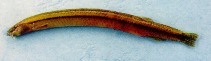
Rayons mous dorsaux (Total) : 8; Rayons mous anaux: 7; Vertèbres: 52 - 58. Differs from all its congeners, except P. pulla and P. apoda by the absence of its pelvic fins and pelvic girdle. Distinguished from P. pulla and P. apoda by the presence of nasal barbels (vs. absence), and further from P. apoda by more abdominal vertebrae (41-44 vs. 38-39), and a further posteriorly placed dorsal fin (predorsal length 74.8-78.7 % SL vs. 69;0-73.3), and from P. pulla by the plain brown color pattern (vs. blackish brown with 20-25 narrow vertical bars) and fewer vertebrae (42-44+ 12-15=55-58 vs. 46-48 + 15-16=61-62). From all other species in Myanmar it differs further by the presence of a nasal barbel (vs. absence), from P. elongata, P. lumbriciformis and P. signicauda by a higher (7.5-9.7 % SL vs. 4.15.0) and shorter caudal peduncle (9.4-12.2 % SL vs. 14.9-16.6), and a different color pattern (plain brown vs. with dark marks on body and fins), from P. pangia and P. elongata by the number of abdominal vertebrae (41-44 vs. 34-39 in P. pangia and 44-46 in P. elongata), and further from P. pangia by shorter pectoral fins (5.7-7.0 % SL vs. 8.2-9.6) (Ref. 57993).
Body shape (shape guide): elongated.
Facultative air-breathing in the genus (Ref. 126274)
Cycle de vie et comportement reproducteur
Maturité | Reproduction | Frai | Œufs | Fécondité | Larves
Kottelat, M., 1998. Fishes of the Nam Theun and Xe Bangfai basins, Laos, with diagnoses of twenty-two new species (Teleostei: Cyprinidae, Balitoridae, Cobitidae, Coiidae and Odontobutidae). Ichthyol. Explor. Freshwat. 9(1):1-128. (Ref. 27732)
Statut dans la liste rouge de l'IUCN (Ref. 130435: Version 2025-2 (Global))
Menace pour l'homme
Harmless
Utilisations par l'homme
Pêcheries: sans intérêt
Outils
Articles particuliers
Télécharger en XML
Sources Internet
Estimations basées sur des modèles
Indice de diversité phylogénétique (Réf.
82804): PD
50 = 0.5000 [Uniqueness, from 0.5 = low to 2.0 = high].
Bayesian length-weight: a=0.00501 (0.00233 - 0.01079), b=3.08 (2.90 - 3.26), in cm total length, based on LWR estimates for this (Sub)family-body shape (Ref.
93245).
Niveau trophique (Réf.
69278): 3.5 ±0.4 se; based on size and trophs of closest relatives
Résilience (Réf.
120179): Haut, temps minimum de doublement de population inférieur à 15 mois (Preliminary K or Fecundity.).
Vulnérabilité de la pêche (Ref.
59153): Low vulnerability (10 of 100).
🛈