>
Ophidiiformes (Cusk eels) >
Carapidae (Pearlfishes) > Pyramodontinae
Eponymy: John Otterbein Snyder (1867–1943) was an American zoologist and pioneer ichthyologist of the American west. [...] (Ref. 128868), visit book page.
More on author: Gilbert.
Ambiente: milieu / zona climatica / distribuzione batimetrica / gamma di distribuzione
Ecologia
marino batidemersale; distribuzione batimetrica 110 - 1762 m (Ref. 75877). Deep-water
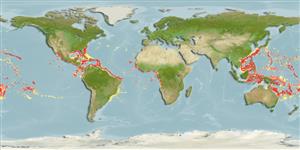
Circumtropical except the eastern tropical Pacific.
Dimensione / Peso / Età
Maturità: Lm ? range ? - ? cm
Max length : 26.8 cm TL maschio/sesso non determinato; (Ref. 6347)
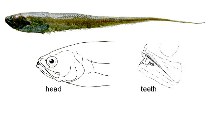
Eel-like, moderate to relatively deep body depth; dorsal-fin origin anterior to anal-fin origin; dorsal and anal fin radials elongate and frail; swim bladder small, not filling visceral cavity and not reaching past anus; lacking rockerbone, cardiform teeth and intrinsic swim bladder constrictions or tunic ridges (Ref. 34024).
Body shape (shape guide): elongated.
An uncommon, free-living species (Ref. 34024) and benthic or pelagic (Ref. 58302).
Ciclo vitale e comportamento di accoppiamento
Maturità | Riproduzione | Deposizione | Uova | Fecondità | Larve
Nielsen, J.G., D.M. Cohen, D.F. Markle and C.R. Robins, 1999. Ophidiiform fishes of the world (Order Ophidiiformes). An annotated and illustrated catalogue of pearlfishes, cusk-eels, brotulas and other ophidiiform fishes known to date. FAO Fish. Synop. 125(18):178p. Rome: FAO. (Ref. 34024)
Stato della Lista Rossa IUCN (Ref. 130435: Version 2025-2 (Global))
Minaccia per l'uomo
Harmless
Usi umani
Pesca: di nessun interesse
Strumenti
Rapporti speciali
Scarica XML
Fonti Internet
Stime basate su modelli
Temperatura preferita (Fonte Biblio.
123201): 5.6 - 14.1, mean 8.5 °C (based on 795 cells).
Indice di diversità filogenetica (Fonte Biblio.
82804): PD
50 = 1.0000 [Uniqueness, from 0.5 = low to 2.0 = high].
Bayesian length-weight: a=0.00389 (0.00180 - 0.00842), b=3.12 (2.94 - 3.30), in cm total length, based on all LWR estimates for this body shape (Ref.
93245).
Livello trofico (Fonte Biblio.
69278): 3.7 ±0.5 se; based on size and trophs of closest relatives
Vulnerabilità della pesca (Ref.
59153): Low vulnerability (17 of 100).
🛈