>
Cypriniformes (Carps) >
Catostomidae (Suckers) > Ictiobinae
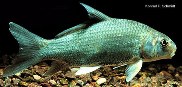
Etymology: Carpiodes: Greek, karpos = wrist, part of the skeleton which unites the hand to the fore arm (Ref. 45335); cyprinus: cyprinus - generic name of the carp, and alludes to its similarity to that fish (Ref. 10294).
More on author: Lesueur.
Milieu: milieu / Klimaatzone / Diepte / verspreidingsgebied
Ecologie
; zoet water demersaal; potamodroom (Ref. 126106). Temperate; 54°N - 30°N
North America: Great Lakes-St. Lawrence River, Hudson Bay and Mississippi River basins from Quebec to Alberta in Canada and south to Louisiana, USA; Atlantic Slope drainages from Delaware River to Altamaha River in USA; Gulf Slope drainages from Apalachicola River to Pearl River in USA.
Grootte / Gewicht / Leeftijd
Maturiteit: Lm ? range ? - ? cm
Max length : 66.0 cm TL mannelijk / geslacht onbekend; (Ref. 5723); common length : 52.1 cm TL mannelijk / geslacht onbekend; (Ref. 12193); max. gepubliceerd gewicht: 2.9 kg (Ref. 40637); max. gerapporteerde leeftijd: 11 Jaren (Ref. 12193)
Adults inhabit pools, backwaters and main channels of creeks and small to large rivers (Ref. 10294). Also found in lakes. Oviparous (Ref. 205). They feed on bottom ooze and benthic invertebrates (Ref. 10294), including insects, mollusks and crustaceans, along with plant detritus and sand (Ref. 93252).
Oviparous (Ref. 205). Breed in streams and ponds with rapid flow, on sand and gravel, or in weedy places (Ref. 205). One female may mate with several males (Ref. 205).
Page, L.M. and B.M. Burr, 1991. A field guide to freshwater fishes of North America north of Mexico. Houghton Mifflin Company, Boston. 432 p. (Ref. 5723)
Status op de Rode Lijst van het IUCN (Ref. 130435: Version 2025-2 (Global))
Gevaar voor de mens
Harmless
Gebruik door de mens
Visserij: commercieel
Tools
Speciale rapporten
Download XML
Internetbronnen
Schattingen op basis van modellen
Fylogenetische diversiteitsindex (Ref.
82804): PD
50 = 0.6250 [Uniqueness, from 0.5 = low to 2.0 = high].
Bayesian length-weight: a=0.00933 (0.00560 - 0.01554), b=3.00 (2.85 - 3.15), in cm total length, based on LWR estimates for this species & (Sub)family-body (Ref.
93245).
Trofisch niveau (Ref.
69278): 2.6 ±0.27 se; based on food items.
Weerstandsvermogen (Ref.
120179): laag, minimale populatieverdubbelingstijd 4,5-14 jaar (tmax=11).
Kwetsbaarheid van de visserij (Ref.
59153): Moderate to high vulnerability (46 of 100).
🛈