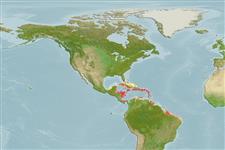
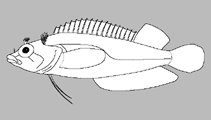
ສະພາບແວດລ້ອມ: ສະພາບແວດລ້ອມ / ເຂດດິນຟ້າອາກາດ / ລະດັບຄວາມເລິກ / ຂອບເຂດການແຈກຢາຍ
ນິເວດວິທະຍາ
ສັດທະເລ ກ່ຽວກັນຫີນ; ລະດັບຄວາມເລິກ 0 - 20 m (Ref. 52855). Tropical
Western Central Atlantic: western Caribbean.
ຂະໜາດ / ນ້ຳໜັກ / ອາຍຸ
ການຈະເລີນເຕັມໄວ: Lm ? range ? - ? cm
Max length : 2.4 cm NG ຕົວຜູ້/ບໍ່ມີເພດ; (Ref. 5515)
ຄີ (ໜາມ)ແຂງຢູ່ຫຼັງປາ (ທັງໝົດ) : 21; ຄີຫຼັງຂອງປາ (ຄີອ່ອນ) (ທັງໝົດ) : 7 - 37; ຄີ(ໜາມ) ແຂງຢູ່ຄີກົ້ນປາ
ກຸ່ມປາກະດູກແຂງ
ຄວາມຖີ່ຂອງກຸ່ມຖ່າຍທອດພັນ
ປາທີ່ມີການເຄື່ອນຍ້າຍຈາກທະເລໄປຫານ້ຳຈືດ ແລະນ້ຳຈືດຫາທະເລ
ປາທີ່ມີການເຄື່ອນຍ້າຍຈາກທະເລແລະໄປໄຂ່ຢູ່ນ້ຳຈືດ
ຄີກົ້ນຂອງປາ
ສັດທີ່ມີກະດູກສັນຫັຼງ
ການຖ່າຍທອດທາງກຳມະພັນຈາກພໍ່ແມ່ຫາລູກ: 2. Common amongst Labrisomids: small, often elongate fishes; largest species about 20 cm standard length, most under 10 cm standard length. Head usually with cirri or fleshy flaps on anterior nostrils, eyes, and laterally on nape; gill membranes continuous with each other across posteroventral surface of head. Each jaw with an outer row of relatively large, canine-like or incisor-like teeth, often with patches of smaller teeth behind; teeth usually also present on vomer and often on palatines (roof of mouth). Dorsal and anal fins long, frequently highest anteriorly; dorsal-fin spines often flexible, outnumbering segmented dorsal-fin soft rays; 2 usually flexible spines in anal fin; pelvic fins inserted anterior to pectoral-fin bases, with 1 spine not visible externally; all fin rays, including those of caudal, unbranched (simple). Cycloid (smooth to touch) scales present at least posteriorly on body. Species distinguished by: dorsal-fin spines usually 21, and 7 to 37 segmented rays; pelvic fin with 2 externally obvious segmented rays; pectoral-fin rays usually 14; pectoral-fin rays not elongated or filamentous; first anal-fin spine of males longer than second; lateral-line tubes or canals present at least anteriorly on body; scales in lateral-line series usually 35 to 41 (some species with fewer); arched lateral-line scales usually 17 or 18, scales in straight portion of lateral line usually 20 to 22; only 1 or no cirrus on each side of nape; cirrus present on anterior nostril; a simple cirrus present above each eye; belly naked or with less than posterior third scaled. Body coloration: body generally brownish with darker spots, blotches, or broken bars; pair of broad, hypural-shaped dark blotches not present at base of caudal fin; lips with distinct black vertical bars; side of head spotted; broad, pale area posterior to orbit either reticulated or branched over preopercle; side of head with pale Y-shaped bar (Ref.52855).
Body shape (shape guide): elongated.
ວົງຈອນຊີວິດ ແລະພຶດຕິກໍາການຫາຄູ່
ການຈະເລີນເຕັມໄວ | ການສືບພັນ | ການວາງໄຂ່ | ໄຂ່ | ຄວາມດົກຂອງໄຂ່ປາ | ຕົວອ່ອນ
Randall, J.E., 1996. Caribbean reef fishes. Third Edition - revised and enlarged. T.F.H. Publications, Inc. Ltd., Hong Kong. 3nd ed. 368 p. (Ref. 13442)
ສະຖານະພາບບັນຊີແດງຂອງ IUCN (Ref. 130435: Version 2025-2 (Global))
ໄພຂົ່ມຂູ່ຕໍ່ມະນຸດ
Harmless
ການນໍາໃຊ້ຂອງມະນຸດ
ການປະມົງ: ທີ່ບໍ່ມີຄວາມສົນໃຈ
ເຄື່ອງມື
ບົດລາຍງານພິເສດ
ດາວໂຫລດ XML
ແຫຼ່ງອີນເຕີເນັດ
ການຄາດຄະເນໂດຍອີງໃສ່ແບບຈໍາລອງ
ອຸນຫະພູມທີ່ຕ້ອງການ (ເອກະສານອ້າງອີງ
123201): 27.5 - 28.5, mean 28 °C (based on 128 cells).
ດັດຊະນີຄວາມຫຼາກຫຼາຍທາງຊີວະພາບ (ເອກະສານອ້າງອີງ
82804): PD
50 = 0.5000 [Uniqueness, from 0.5 = low to 2.0 = high].
Bayesian length-weight: a=0.00525 (0.00218 - 0.01265), b=3.08 (2.86 - 3.30), in cm total length, based on LWR estimates for this (Sub)family-body shape (Ref.
93245).
ຊັ້ນເຂດຮ້ອນ (ເອກະສານອ້າງອີງ
69278): 3.3 ±0.4 se; based on size and trophs of closest relatives
ຄວາມສ່ຽງຕໍ່ການຫາປາ (Ref.
59153): Low vulnerability (10 of 100).
🛈