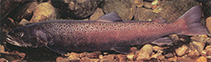
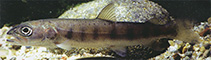
पर्यावरण: पर्यावरण / जलवायु क्षेत्र / गहराई सीमा / वितरण सीमा
पारिस्थितिकी
; स्वच्छ जल, अलवण जल बेनथोपिलाजिक; पोटामोड़िरोमस (Ref. 59043). Temperate; 6°C - 18°C (Ref. 2059); 50°N - 44°N, 8°E - 21°E
Europe: Danube drainage. Introduced into other European river basins when their numbers declined due to ecological changes in the Danube.
प्रथम परिपक्वता पर लंबाई / आकार / वज़न / आयु
परिपक्व अवधि: Lm ? range ? - ? cm
Max length : 150 cm TL पुल्लिंग / अलिंग; (Ref. 11243); common length : 70.0 cm TL पुल्लिंग / अलिंग; (Ref. 682); अधिकतम प्रकाशित वज़न: 52.0 kg (Ref. 719); अधिकतम सूचित उम्र: 20 वर्षो (Ref. 59043)
पृष्ठीय रीढ़ (सम्पूर्ण) : 3 - 5; पृष्ठीय सौफट रेज़ (सम्पूर्ण) : 8 - 14; गुदा कांटा: 3 - 5; ऐनल सौफट रेज़: 7 - 14; जानवरों की रीड़ का जोड़: 66 - 72. Distinguished from other species of Salmonidae in central and eastern Europe by the following combination of characters: lateral line with 180-200 scales; no red spots and white fin margins; head dorsally flattened and long ( 22-24% SL); body roundish; caudal fin deeply emarginate; large size (in undisturbed areas); usually 13-19 gill rakers (Ref. 59043).
Body shape (shape guide): fusiform / normal.
Usually solitary, inhabits deeper regions of swift flowing streams with oxygen rich waters. Adults are territorial but not solitary (Ref. 26170). Carnivore. Juveniles feed mainly on invertebrates and adults mostly on fishes, but also prey on amphibians, reptiles, small mammals and waterfowl (Ref. 26170). Important sport fish with minimum size of catch from 50-55 cm. Transplantations of young artificially incubated and reared fish have not been successful. Depletion of stocks due to overexploitation, industrial pollution, waterway redirection and badly designed or non-existent fish ladders in dams and reservoirs. Territorial, but migrates short distances upstream for spawning (Ref. 556). Reported to be one of the biggest freshwater fishes of the world, reaching a length of over 2 m and weight of over 100 kg (Ref. 26170); which is probably erroneous (A. Mangold, pers. comm.).
Sexually mature fish migrate upstream into smaller and shallower (0.3-1.5 m deep) streams (Ref. 26170), usually in upper reaches of tributaries (Ref. 59043). Males arrive first at spawning sites. Males defend females against other individuals. Spawning usually occurs during daytime (Ref. 59043). Spawns on gravelly bottom where female makes a shallow hole where the eggs are laid and covered with gravel (Ref. 682). Both sexes covered the eggs with substrate. They both defend the spawning site up to 2 weeks after spawning. Eggs usually hatch after 25-40 days. Larvae stay in gravel until yolk sac is absorbed after 8-14 days (Ref. 59043). Young remain near spawning area feeding on bottom fauna. Spawns with snow melt, in shallow water in Danube or affluents (Ref. 682).
Kottelat, M., 1997. European freshwater fishes. An heuristic checklist of the freshwater fishes of Europe (exclusive of former USSR), with an introduction for non-systematists and comments on nomenclature and conservation. Biologia, Bratislava, 52/Suppl. 5:1-271. (Ref. 13696)
आईयूसीएन रेड लिस्ट स्थिति (Ref. 130435: Version 2025-2 (Global))
मनुष्यों के लिए ख़तरा
Harmless
मानव उपयोग
मात्स्यिकी: व्यापारिक; जलीयकृषि: व्यापारिक; आखेट मत्स्य: हां
साधन
विशेष रिपोर्ट
XML डाउनलोड करें
इंटरनेट स्रोत
मॉडल पर आधारित अनुमान
जातिवृति विविधता सूचकांक (संदर्भ
82804): PD
50 = 0.5625 [Uniqueness, from 0.5 = low to 2.0 = high].
Bayesian length-weight: a=0.01230 (0.00726 - 0.02086), b=3.01 (2.86 - 3.16), in cm total length, based on LWR estimates for this species & (Sub)family-body (Ref.
93245).
ट्रॉफिक स्तर (संदर्भ
69278): 4.2 ±0.74 se; based on food items.
Generation time: 11.0 ( na - na) years. Estimated as median ln(3)/K based on 2
growth studies.
लौटाव (संदर्भ
120179): निम्न, न्यूनतम जनसंख्या दुगनी होने का समय 4.5 - 14 वर्ष। (tm=5; tmax=20).
मछली पकड़ने की भेद्यता (Ref.
59153): High to very high vulnerability (68 of 100).
🛈