>
Beryciformes (Sawbellies) >
Cetomimidae (Flabby whalefishes)
Etymology: Mirapinna: Latin, mirus = wonderful + Latin, pinna = thorn (Ref. 45335).
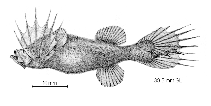
Eponymy: Esau, in the Book of Genesis in the Old Testament of the Bible, is described as being ‘a hairy man’. The allusion is not explained but presumably refers to the “…dense pile of hair-like outgrowths” covering nearly the entire body. (Ref. 128868), visit book page.
Umwelt: Milieu / Klimazone / Tiefenbereich / Verbreitungsgebiet
Ökologie
seewasser benthopelagisch. Subtropical
Eastern Atlantic: one specimen caught north of Azores Island (47°20'N, 22°30'W).
Größe / Gewicht / Alter
Geschlechtsreife: Lm ? range ? - ? cm
Max length : 5.5 cm TL Männchen/unbestimmt; (Ref. 557)
Pelagic (Ref. 51024). Only known specimen was caught near the surface. Feeds on copepods (Ref. 6713).
Lebenszyklus und Paarungsverhalten
Geschlechtsreife | Fortpflanzung | Ablaichen | Eier | Fruchtbarkeit | Larven
Wheeler, A., 1977. Das grosse Buch der Fische. Eugen Ulmer GmbH & Co. Stuttgart. 356 p. (Ref. 557)
IUCN Rote Liste Status (Ref. 130435: Version 2025-2 (Global))
Bedrohung für Menschen
Harmless
Nutzung durch Menschen
Tools
Zusatzinformationen
Download XML
Internet Quellen
Schätzungen auf der Grundlage von Modellen
Phylogenetischer Diversitätsindex (Ref.
82804): PD
50 = 1.0000 [Uniqueness, from 0.5 = low to 2.0 = high].
Bayesian length-weight: a=0.00389 (0.00180 - 0.00842), b=3.12 (2.94 - 3.30), in cm total length, based on all LWR estimates for this body shape (Ref.
93245).
Trophische Ebene (Ref.
69278): 3.0 ±0.00 se; based on food items.
Widerstandsfähigkeit (Ref.
120179): hoch, Verdopplung der Population dauert weniger als 15 Monate. (Preliminary K or Fecundity.).
Anfälligkeit der Fischerei (Ref.
59153): Low vulnerability (10 of 100).
🛈