वर्गीकरण / नाम
आम नाम | उपशब्द | Catalog of Fishes(वर्ग, प्रजाति) | ITIS | CoL | WoRMS | Cloffa
पर्यावरण: पर्यावरण / जलवायु क्षेत्र / गहराई सीमा / वितरण सीमा
पारिस्थितिकी
; स्वच्छ जल, अलवण जल बेनथोपिलाजिक; गहराई सीमा 0 - ? m. Temperate; 60°N - 40°N
Europe: central and eastern Europe and northern Asia Minor (Ref. 57778). Basins of North, southern Baltic, Black, western and southern Caspian and Aegean Seas (from Maritza to Struma drainages); Mediterranean basin, only in northern Rhône (France) and Drin drainages (Alabania, Montenegro, Macedonia). Abundant and expanding in most of its range, but locally threatened by water pollution, weed clearing, and stocking of predatory fish (Ref. 59043).
प्रथम परिपक्वता पर लंबाई / आकार / वज़न / आयु
परिपक्व अवधि: Lm 4.4, range 3 - 6 cm
Max length : 11.2 cm TL पुल्लिंग / अलिंग; (Ref. 88166); common length : 5.0 cm TL पुल्लिंग / अलिंग; (Ref. 556); अधिकतम सूचित उम्र: 5 वर्षो (Ref. 9696)
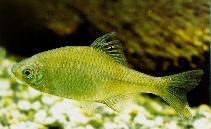
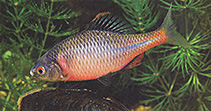
पृष्ठीय रीढ़ (सम्पूर्ण) : 3; पृष्ठीय सौफट रेज़ (सम्पूर्ण) : 8 - 10; गुदा कांटा: 3; ऐनल सौफट रेज़: 8 - 10; जानवरों की रीड़ का जोड़: 34 - 36. Caudal fin with 19 to 20 soft rays. Differs from Rhodeus meridionalis by having sub-inferior mouth (vs. terminal), rostral cap covering all or at least more than half of upper lip (vs. only upper part of upper lip) (Ref. 59043).
Body shape (shape guide): fusiform / normal.
Occurs most abundantly in still or slow-flowing water with dense aquatic vegetation and sand-silt bottom as lowland ponds, canals, slow-flowing rivers, backwaters and oxbows, where mussels are present (Ref. 59043). Found among plants over sand and muddy bottoms in shallow waters. Remarkable for its habit of deposing its eggs in the cavity of bivalves (Unio). Feeds mainly on plants and to a lesser degree on worms, crustaceans, and insect larvae. Formerly used for pregnancy tests: females injected with urine from pregnant women protruded their ovipositors (Ref. 6258). Live span is exceptionally up to 5 years but most individuals do not survive the year of their first reproduction and population sizes fluctuate greatly over the years (Ref. 59043).
Spawns in clear, slow-running or still water, often with a muddy bottom. The presence of nearby freshwater mussels is of vital importance. Female deposits eggs within the valves of the mussel. Male sheds sperm into the inhalent current of the respiring mussel and thereby, fertilizes the eggs. Fry remain in the mussel until protection is not anymore required.
Kottelat, M. and J. Freyhof, 2007. Handbook of European freshwater fishes. Publications Kottelat, Cornol and Freyhof, Berlin. 646 pp. (Ref. 59043)
आईयूसीएन रेड लिस्ट स्थिति (Ref. 130435: Version 2025-2 (Global))
मनुष्यों के लिए ख़तरा
Harmless
मानव उपयोग
मात्स्यिकी: कोई रुचि बग़ैर; जलजीवालय: व्यापारिक; ठहराव / प्रलोभन: occasionally
साधन
विशेष रिपोर्ट
XML डाउनलोड करें
इंटरनेट स्रोत
मॉडल पर आधारित अनुमान
जातिवृति विविधता सूचकांक (संदर्भ
82804): PD
50 = 0.5000 [Uniqueness, from 0.5 = low to 2.0 = high].
Bayesian length-weight: a=0.01047 (0.00797 - 0.01375), b=3.10 (3.05 - 3.15), in cm total length, based on LWR estimates for this species (Ref.
93245).
ट्रॉफिक स्तर (संदर्भ
69278): 3.0 ±0.34 se; based on food items.
Generation time: 4.4 ( na - na) years. Estimated as median ln(3)/K based on 1
growth studies.
लौटाव (संदर्भ
120179): निम्न, न्यूनतम जनसंख्या दुगनी होने का समय 4.5 - 14 वर्ष। (tm=2; tmax=5; Fec=40).
मछली पकड़ने की भेद्यता (Ref.
59153): Moderate vulnerability (37 of 100).
🛈