>
Cyprinodontiformes (Rivulines, killifishes and live bearers) >
Fundulidae (Topminnows and killifishes)
Etymology: Fundulus: Latin, fundus = bottom; a peculiar name for a topminnow, coined for a bottom species of Atlantic coast being "the abode of the fundulus mudfish" (Ref. 45335); zebrinus: From the Latin word Fundus=bottom, the habitat; zebrinus=like a zebra (in reference to the vertical bars or stripes) (Ref. 79012).
More on authors: Jordan & Gilbert.
Environnement : milieu / zone climatique / profondeur / gamme de distribution
Écologie
; eau douce; saumâtre benthopélagique; pH range: 7.0 - ?. Tropical; 20°C - 25°C (Ref. 2060); 46°N - 29°N
North America: Mississippi River and Gulf Slope basins in the USA from northern central Montana to central Wyoming and south to Colorado River, Brazos River, Galveston Bay and Rio Grande drainages in Texas (Ref. 5723). Distinct from Fundulus kansae which is found in the drainages north of the Red River (Ref. 55961).
Taille / Poids / Âge
Maturité: Lm ? range ? - ? cm
Max length : 8.0 cm TL mâle / non sexé; (Ref. 27139); common length : 6.9 cm TL mâle / non sexé; (Ref. 12193); âge max. reporté: 3.00 années (Ref. 12193)
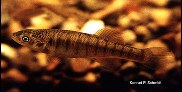
Adults inhabit shallow sandy runs, pools, and backwaters of headwaters, creeks and small to medium rivers. They tolerates extremely alkaline and saline streams, and often found where few other fishes can survive. Migratory behaviour is undetermined (Ref. 126106). This species buries headfirst in sand and orients itself with only mouth and eyes are visible. This habit may protect the fish from intense sunlight or may help avoid predators, detect potential prey, or stream desiccation. 10 cm max TL (Ref. 5723). Not a seasonal killifish. Is easy to maintain in the aquarium (Ref. 27139).
Cycle de vie et comportement reproducteur
Maturité | Reproduction | Frai | Œufs | Fécondité | Larves
Poss, S.G. and R.R. Miller, 1983. Taxonomic status of the plains killifish, Fundulus zebrinus. Copeia 1983(1):55-67. (Ref. 35647)
Statut dans la liste rouge de l'IUCN (Ref. 130435: Version 2025-2 (Global))
Menace pour l'homme
Harmless
Utilisations par l'homme
Pêcheries: commercial; Aquarium: Commercial
Outils
Articles particuliers
Télécharger en XML
Sources Internet
Estimations basées sur des modèles
Indice de diversité phylogénétique (Réf.
82804): PD
50 = 0.5000 [Uniqueness, from 0.5 = low to 2.0 = high].
Bayesian length-weight: a=0.00724 (0.00291 - 0.01803), b=3.17 (2.98 - 3.36), in cm total length, based on LWR estimates for this Genus-body shape (Ref.
93245).
Niveau trophique (Réf.
69278): 3.2 ±0.2 se; based on size and trophs of closest relatives
Résilience (Réf.
120179): Haut, temps minimum de doublement de population inférieur à 15 mois (tmax=3).
Vulnérabilité de la pêche (Ref.
59153): Low vulnerability (10 of 100).
🛈