分類 / 名稱
俗名 | 同種異名 | Catalog of Fishes(屬, 種) | ITIS | CoL | WoRMS | Cloffa
Teleostei >
Gadiformes (Cods)
鱈形目 (Cods) >
Lotidae (Hakes and burbots)
江鱈科 (Hakes and burbots)
Etymology: Lota: French name for the cod (Ref. 45335); lota: From the French word "la Lotte" meaning codfish (Ref. 10294).
More on author: Linnaeus.
環境: 環境 / 氣候帶 / 深度上下限 / 配送範圍
生態學
; 淡水; 半鹹淡水 居於水底的; pH range: 7.5 - ? ; dH range: 18 - ?; 河川洄游 (Ref. 59043); 深度上下限 1 - 700 m (Ref. 1998). 溫帶; 4°C - 18°C (Ref. 2059); 78°N - 40°N, 180°W - 180°E
Circumarctic in freshwater (Ref. 1371). Europe: Loire drainage, France eastward to White, Barents and Arctic Sea basins; upper Volga drainage; western Caspian basin; rivers draining to Black Sea; Rhône drainage (France); in Italy native only in Po drainage; eastrward England (now extirpated). In Siberia eastward to River Lena. Reported that populations from eastern Siberia and North America belong to a different species, Lota maculosa (Ref. 59043). North America: Throughout Canada, Alaska and northern USA (south to Pennysylvannia, Kentucky, Missouri, Wyoming and Washington (Ref. 86798).
在淡水中的 Circumarctic。
初熟時的長度 / 大小 / 重量 / 年齡
成熟度: Lm 37.5, range 35 - 40 cm
Max length : 152 cm TL 雄魚/尚未辨別雌雄; (Ref. 27547); common length : 40.0 cm TL 雄魚/尚未辨別雌雄; (Ref. 1371); 最大體重: 34.0 kg (Ref. 27547); 最大年齡: 20 年 (Ref. 556)
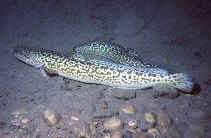
背棘 (總數) : 0; 背的軟條 (總數) : 67 - 96; 臀棘: 0; 臀鰭軟條: 58 - 84; 脊椎骨: 50 - 67. Diagnosed from all other freshwater fishes in Europe by its pelvic fin origin anterior to pectoral fin origin and by having one central barbel on lower jaw (Ref. 59043). Distinguished by the long second dorsal fin, at least 6 times as long as the first, and a single barbel on the chin (Ref. 27547). Gill rakers short (Ref. 27547). First dorsal short; second dorsal and anal fins joined to caudal; pectorals short and rounded; caudal rounded (Ref. 27547), with 40 rays (Ref. 2196). Color is yellow, light tan to brown with a pattern of dark brown or black on the body, head and fins (Ref. 1371). Pelvic fins pale, others dark and mottled (Ref. 27547).
Body shape (shape guide): elongated; Cross section: circular.
區別的特徵為長的第二背鰭鰭了, 至少 6 在下巴上倍長於第一個 , 與一個觸鬚。 (參考文獻 27547) 鰓耙短.(參考文獻 27547) 第一背鰭短; 第二背鰭與臀鰭連到了尾部的; 胸鰭短的而且圓的; 尾鰭圓的 (參考文獻 27547), 與 40個鰭條.(參考文獻 2196) 色彩是黃色, 淡的黃褐色的褐色有圖案深褐色或黑色的在身體,頭部與鰭上.(參考文獻 1371) 腹鰭灰白的, 其它黑色與雜色的.(參考文獻 27547)
The only member of Lotidae family which lives in freshwater. Crepuscular and nocturnal (Ref. 11941). Adults are found in well oxygenated flowing waters and large, deep lakes as well as large rivers with slow-moving current (Ref. 5723, 10294). They occur from estuaries of large lowland rivers as well as from small mountain streams, preferring deep waters in summer (Ref. 59043). They seek shelter under rocks, in crevices on the river banks, among roots of trees and dense vegetation (Ref. 30578, 10294). Those in rivers tend to congregate in deep holes throughout the year, except at spawning (Ref. 27547). Movements into shallower water during summer nights are related to feeding (Ref. 1998). Smaller individuals feed on insect larvae, crayfish, mollusks and other invertebrates with a changing preference for fishes in larger individuals (Ref. 1998, 10294). In Central Europe, males mature at 2 years while females at 3 years (Ref. 59043). Spawning occurs from November to March, at temperatures below 6°C in groups of up to 20 interlaced individuals forming a ball about 60 cm in diameter which constantly move and roll on the bottom while releasing eggs and sperms (Ref. 59043). May undertake short spawning migrations (Ref. 59043). Eggs are semipelagic, 1.2-1.8 mm in diameter and slightly sticky hatching after 40-70 days (Ref. 59043). Larvae are positively phototactic, floating below the surface in March and April (Ref. 59043). Larvae feed on drifting invertebrates or zooplankton (Ref. 59043). Source of oil. Sold mainly salted. Liver is sold smoked or canned in Europe (Ref. 1998). Processed into fishmeal (Ref. 1998). Because of its nocturnal habits and its slow movements, this fish is not very much appreciated by sport fishermen. Flesh is tasty but a little dry (Ref. 30578). Locally threatened due to river regulation (Ref. 59043).
生活在淡水中的該科的唯一成員。 晨昏而夜行的.(參考文獻 11941) 用緩慢移動的水流棲息於深的湖與大河 (參考文獻 5723,10294) 。 在河岸上的裂隙中,尋找在岩石下面的庇護所, 在樹與茂密的植物根之中。 (參考文獻 30578,10294) 那些在河傾向在深潭中聚集全年度, 除.在產卵之外.(參考文獻 27547) 進入較淺的水域之內的運動夜晚被與進食有關夏天時.(參考文獻 1998) 較小的個體吃昆蟲幼生,小龍蝦, 軟體動物,而且其他的無脊椎動物具有一個較大的個體中改變對魚的偏愛。 (參考文獻 1998,10294) 油的來源。 販賣主要鹽醃。 肝臟被賣在歐洲煙燻或裝於罐頭。 (參考文獻 1998) 加工成魚粉.。 (參考文獻 1998) 由於它的夜行習慣與它的慢運動, 這一個魚非常不被獲得運動釣魚者賞識。 肉是好吃的但是一個小乾.(參考文獻 30578)
There appears to be individual movements into spawning areas with the males arriving first at spawning areas (Ref. 27547). It occurs at night, with spawners forming a great globular mass, each pushing toward the center (Ref. 28694), or at least milling around close together (Ref. 28697), releasing eggs or sperm. Observed to make postspawning runs upriver, apparently for feeding (Ref. 28697). Eggs hatch after 40-70 days. After about 2 months, juveniles are benthic, grow rapidly, reach about 8 cm SL within first year. (Ref. 59043). 在淡水中的 Circumarctic。
Cohen, D.M., T. Inada, T. Iwamoto and N. Scialabba, 1990. FAO species catalogue. Vol. 10. Gadiform fishes of the world (Order Gadiformes). An annotated and illustrated catalogue of cods, hakes, grenadiers and other gadiform fishes known to date. FAO Fish. Synop. 125(10). Rome: FAO. 442 p. (Ref. 1371)
IUCN 瀕危狀態 (Ref. 130435: Version 2025-2 (Global))
無危 (LC) ; Date assessed: 28 May 2022
人類使用
漁業: 商業性; 養殖: 實驗的; 游釣魚種: 是的; 水族館: 公眾的水族館
工具
特別的報告
下載 XML
網路資源
基於模型的估計
系統發育多樣性指數 (參考文獻
82804): PD
50 = 1.0312 [Uniqueness, from 0.5 = low to 2.0 = high].
Bayesian length-weight: a=0.00537 (0.00441 - 0.00654), b=3.04 (2.98 - 3.10), in cm total length, based on LWR estimates for this species (Ref.
93245).
營養階層 (參考文獻
69278): 3.8 ±0.2 se; based on diet studies.
回復力 (參考文獻
120179): 低的, 最小族群倍增時間4.5 - 14 年 (K=0.05; tm=2-7; tmax=20).
釣魚的脆弱性 (Ref.
59153): High to very high vulnerability (66 of 100).
🛈
營養素 (Ref.
124155): Calcium = 12.9 [7.2, 34.7] mg/100g; Iron = 0.259 [0.142, 0.500] mg/100g; Protein = 17.5 [16.2, 19.0] %; Omega3 = 0.382 [0.200, 0.694] g/100g; Selenium = 24.4 [8.5, 62.9] μg/100g; VitaminA = 4.33 [1.21, 18.17] μg/100g; Zinc = 0.671 [0.485, 0.920] mg/100g (wet weight); based on
nutrient studies.