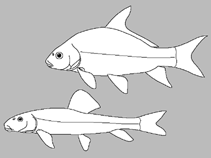
>
Cypriniformes (Carps) >
Catostomidae (Suckers) > Catostominae
Etymology: Vexillichthys: From the Latin vexillum; atripinnis: From the words atri, meaning black; and pinne, fin (Ref. 10294).
Meio ambiente: milieu / Zona climática / intervalo de profundidade / faixa de distribuição
Ecologia
; Água doce demersal; não migratória (Ref. 126106). Temperate; 37°N - 36°N
North America: Upper Barren River system (in Green River drainage) in Kentucky and Tennessee, USA.
Tamanho / Peso / Idade
Maturidade: Lm ? range ? - ? cm
Max length : 17.0 cm TL macho/indeterminado; (Ref. 5723); common length : 12.3 cm TL macho/indeterminado; (Ref. 12193); idade máx. registrada: 4 anos (Ref. 12193)
Adults inhabit rocky pools and adjacent riffles of creeks and small rivers. They hide in bedrock crevices, near boulders or under shoreline brush (Ref. 5723, 10294). Food consists of midge larvae, microcrustacea and occasional larger insect larvae (Ref. 10294).
Ciclo de vida ou comportamento de acasalamento
Maturidade | Reprodução | Desova | Ovos | Fecundidade | Larvas
Page, L.M. and B.M. Burr, 1991. A field guide to freshwater fishes of North America north of Mexico. Houghton Mifflin Company, Boston. 432 p. (Ref. 5723)
Status na Lista Vermelha da UICN (Ref. 130435: Version 2025-2 (Global))
Ameaça para os humanos
Harmless
Uso pelos humanos
Ferramentas
Relatórios especiais
Baixar XML
Fontes da internet
Estimativas baseadas em modelos
Índice de diversidade filogenética (Ref.
82804): PD
50 = 1.0000 [Uniqueness, from 0.5 = low to 2.0 = high].
Bayesian length-weight: a=0.00537 (0.00228 - 0.01266), b=3.05 (2.84 - 3.26), in cm total length, based on LWR estimates for this (Sub)family-body shape (Ref.
93245).
Nível Trófico (Ref.
69278): 3.0 ±0.4 se; based on size and trophs of closest relatives
Resiliência (Ref.
120179): médio(a), tempo mínimo de duplicação da população 1,4 - 4,4 anos (tmax=4).
Vulnerabilidade da pesca (Ref.
59153): Low vulnerability (10 of 100).
🛈