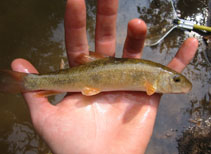
>
Cypriniformes (Carps) >
Catostomidae (Suckers) > Catostominae
Etymology: Catostomus: Greek, kata = down + Greek, stoma = mouth (Ref. 45335); commersonii: Named after P. Commerson, early french naturalist.
Eponymy: Dr Philibert Commerson (1727–1773) was known as ‘doctor, botanist and naturalist of the King’. [...] (Ref. 128868), visit book page.
More on author: Lacepède.
Ambiente: milieu / zona climatica / distribuzione batimetrica / gamma di distribuzione
Ecologia
; acqua dolce; salmastro demersale; potamodromo (Ref. 126106), usually ? - 30 m (Ref. 1998). Temperate; 0°C - 29°C (Ref. 35682); 68°N - 34°N
North America: throughout most of Canada to the Atlantic Coast, south through North Carolina to New Mexico in the USA, becoming less common in the southern High Plains.
Lunghezza alla prima maturità / Dimensione / Peso / Età
Maturità: Lm ?, range 23 - ? cm
Max length : 65.0 cm TL maschio/sesso non determinato; (Ref. 10294); common length : 40.7 cm TL maschio/sesso non determinato; (Ref. 12193); peso massimo pubblicato: 2.9 kg (Ref. 4699); Età massima riportata: 12 anni (Ref. 12193)
Adults inhabit a wide range of habitats, from rocky pools and riffles of headwaters to large lakes. They usually occur in small, clear, cool creeks and small to medium rivers. May be found at a depth greater than 45 m (Ref. 1998). They move to shallower water near sunrise and sunset to feed. Fry (1.2 cm in length) feed on plankton and other small invertebrates; bottom feeding commences upon reaching a length of 1.6-1.8 cm. Preyed upon by birds, fishes, lamprey, and mammals (Ref. 1998). Flesh is white, flaky, and sweet (Ref. 1998).
Adults home to certain gravelly spawning streams. Two to four males crowd around a female and press against her with their fins. Eggs are scattered and adhere to the gravel or are carried downstream and adhere to the substrate when the water is calmer. The spawning act lasts for 3-4 seconds and may occur 6-40 times an hour (Ref. 1998). Spent adults return to the lake 10-14 days after spawning began. Most females return to the lake during the first half of the downstream migration followed by most males in the latter half. Downstream fry migration occurs between dusk and dawn (Ref. 10928).
Page, L.M. and B.M. Burr, 1991. A field guide to freshwater fishes of North America north of Mexico. Houghton Mifflin Company, Boston. 432 p. (Ref. 5723)
Stato della Lista Rossa IUCN (Ref. 130435: Version 2025-2 (Global))
Minaccia per l'uomo
Harmless
Usi umani
Pesca: scarso interesse commerciale; Acquacoltura: commerciale; Pesce da pesca sportiva: si; esca: occasionally
Strumenti
Rapporti speciali
Scarica XML
Fonti Internet
Stime basate su modelli
Indice di diversità filogenetica (Fonte Biblio.
82804): PD
50 = 0.5000 [Uniqueness, from 0.5 = low to 2.0 = high].
Bayesian length-weight: a=0.01096 (0.00879 - 0.01368), b=3.00 (2.93 - 3.07), in cm total length, based on LWR estimates for this species (Ref.
93245).
Livello trofico (Fonte Biblio.
69278): 2.8 ±0.2 se; based on diet studies.
Generation time: 8.5 ( na - na) years. Estimated as median ln(3)/K based on 2
growth studies.
Resilienza (Fonte Biblio.
120179): Basso, tempo minimo di raddoppiamento della popolazione 4.5 - 14 anni (tm=6; tmax=12).
Vulnerabilità della pesca (Ref.
59153): High vulnerability (57 of 100).
🛈
Nutrienti (Ref.
124155): Calcium = 52.1 [25.3, 83.6] mg/100g; Iron = 0.403 [0.252, 0.694] mg/100g; Protein = 16.6 [14.4, 19.2] %; Omega3 = 0.736 [0.374, 1.461] g/100g; Selenium = 14.8 [8.2, 28.1] μg/100g; VitaminA = 11.4 [4.2, 29.5] μg/100g; Zinc = 0.696 [0.520, 0.964] mg/100g (wet weight); based on
nutrient studies.