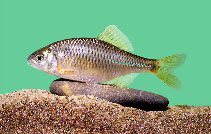
ສະພາບແວດລ້ອມ: ສະພາບແວດລ້ອມ / ເຂດດິນຟ້າອາກາດ / ລະດັບຄວາມເລິກ / ຂອບເຂດການແຈກຢາຍ
ນິເວດວິທະຍາ
; ນ້ຳຈືດ ກ່ຽວກັບ (ຢູ່)ເທິງຊັ້ນພື້ນດິນໃນທະເລເປີດ; pH range: 5.8 - 6.3; dH range: 2 - 3; ບໍ່ມີການເຄື່ອນຍ້າຍ (Ref. 126106); ລະດັບຄວາມເລິກ 0 - ? m. Temperate; 18°C - 21°C (Ref. 1672); 60°N - 35°N, 5°W - 145°E
Asia. Amur basin and Sakhalin Island, Russia. Introduced elsewhere.
ຄວາມຍາວໃນການເຕີບໂຕເຕັມຄັ້ງທໍາອິດ / ຂະໜາດ / ນ້ຳໜັກ / ອາຍຸ
ການຈະເລີນເຕັມໄວ: Lm 3.5, range 3 - 4 cm
Max length : 11.0 cm TL ຕົວຜູ້/ບໍ່ມີເພດ; (Ref. 5723); ອາຍຸສູງສຸດທີ່ເຄຍລາຍງານມາ: 5 ປີ (Ref. 27368)
ຄີ (ໜາມ)ແຂງຢູ່ຫຼັງປາ (ທັງໝົດ) : 3; ຄີຫຼັງຂອງປາ (ຄີອ່ອນ) (ທັງໝົດ) : 8 - 10; ຄີ(ໜາມ) ແຂງຢູ່ຄີກົ້ນປາ
ກຸ່ມປາກະດູກແຂງ
ຄວາມຖີ່ຂອງກຸ່ມຖ່າຍທອດພັນ
ປາທີ່ມີການເຄື່ອນຍ້າຍຈາກທະເລໄປຫານ້ຳຈືດ ແລະນ້ຳຈືດຫາທະເລ
ປາທີ່ມີການເຄື່ອນຍ້າຍຈາກທະເລແລະໄປໄຂ່ຢູ່ນ້ຳຈືດ
ຄີກົ້ນຂອງປາ
ສັດທີ່ມີກະດູກສັນຫັຼງ
ການຖ່າຍທອດທາງກຳມະພັນຈາກພໍ່ແມ່ຫາລູກ: 3; ຄີກົ້ນຂອງປາ: 8 - 10; ສັດທີ່ມີກະດູກສັນຫຼັງ: 34 - 38.
Body shape (shape guide): fusiform / normal.
Adults occur in ponds, lakes, marshes, muddy and sandy pools and backwaters of rivers (Ref. 5723). They feed mainly on plant material but also on small larvae of insects. Their occurrence is related to those of the bivalve Anodonta cygnea and other freshwater mussels (Ref. 30578). Known for their habit of laying eggs in the mantle cavity of freshwater mussels (Ref. 1739). Reproduction takes place from April to June (Ref. 30578). Migratory behaviour is undetermined (Ref. 126106).
Hides eggs in live invertebrates such as mussels, crabs or ascidians. The female develops a conduit ovipositor by which it deposits its ovules between the gills of the bivalve. The male then comes to deposit its seed close to the respiratory opening of the bivalve; at the interior of which fertilization takes place. The male keeps the eggs and alevins until they leave the refuge. In exchange, the fish rids the bivalve of its parasites (Ref. 30578). The young leave the mussel about 28 days after hatching, having reached a length of about 10 mm (Ref. 41678).
Bogutskaya, N.G. and A.M. Komlev, 2001. Some new data to morphology of Rhodeus sericeus (Cyprinidae: Acheilognathinae) and a description of a new species, Rhodeus colchicus, from West Transcaucasia. Proc. Zool. Inst. 287:81-97. (Ref. 50154)
ສະຖານະພາບບັນຊີແດງຂອງ IUCN (Ref. 130435: Version 2025-2 (Global))
ໄພຂົ່ມຂູ່ຕໍ່ມະນຸດ
Harmless
ການນໍາໃຊ້ຂອງມະນຸດ
ການປະມົງ: ທີ່ບໍ່ມີຄວາມສົນໃຈ; ຕູ້ປາ: ບ່ອນວາງສະແດງສັນນ້ຳຂອງລັດ
ເຄື່ອງມື
ບົດລາຍງານພິເສດ
ດາວໂຫລດ XML
ແຫຼ່ງອີນເຕີເນັດ
ການຄາດຄະເນໂດຍອີງໃສ່ແບບຈໍາລອງ
ດັດຊະນີຄວາມຫຼາກຫຼາຍທາງຊີວະພາບ (ເອກະສານອ້າງອີງ
82804): PD
50 = 0.5000 [Uniqueness, from 0.5 = low to 2.0 = high].
Bayesian length-weight: a=0.00933 (0.00581 - 0.01499), b=3.07 (2.94 - 3.20), in cm total length, based on LWR estimates for this species & Genus-body shape (Ref.
93245).
ຊັ້ນເຂດຮ້ອນ (ເອກະສານອ້າງອີງ
69278): 2.1 ±0.08 se; based on food items.
Generation time: 3.4 ( na - na) years. Estimated as median ln(3)/K based on 2
growth studies.
ຄວາມຢືດຢຸ່ນ (ເອກະສານອ້າງອີງ
120179): ຂະໜາດກາງ, ປະຊາກອນຕຳ່ສຸດທີ່ໃຊ້ເວລາສອງເທົ່າ 1.4 - 4.4 ປີ (tm=2; tmax=5; Fec=100).
ຄວາມສ່ຽງຕໍ່ການຫາປາ (Ref.
59153): Low vulnerability (19 of 100).
🛈