>
Cypriniformes (Carps) >
Cyprinidae (Minnows or carps) > Cyprininae
Etymology: Hypsibarbus: Greek, hypsi = high + Latin, barbus = barbel (Ref. 45335).
Eponymy: Dr Malcolm Arthur Smith (1875–1958) was an English physician and herpetologist. [...] (Ref. 128868), visit book page.
More on author: Smith.
Milieu: milieu / Klimaatzone / Diepte / verspreidingsgebied
Ecologie
; zoet water benthopelagisch; potamodroom (Ref. 51243). Tropical
Asia: Mekong, Chao Phraya and Mae Khlong basins and Malay Peninsula (Ref. 26580). Usually absent from the lowland parts of the Mekong, although it can be found in rapidly flowing tributaries to the lower Mekong (Ref. 12693).
Grootte / Gewicht / Leeftijd
Maturiteit: Lm ? range ? - ? cm
Max length : 50.0 cm SL mannelijk / geslacht onbekend; (Ref. 30857)
Korte beschrijving
Determinatiesleutels | Morfologie | Morfometrie
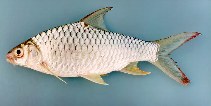
Dorsale zachte stralen (totaal) : 8; Anale zachte stralen: 5. Upper body dark and greenish (Ref. 37768); 7-8 gill rakers on first arch (Ref. 12693).
Body shape (shape guide): fusiform / normal.
Occurs in midwater to bottom depths in large and medium-sized rivers. Found in large rivers in the dry season and moves to medium-sized rivers in the wet season. Usually found over coarse substrate. Has not persisted in any impoundments. Its gut is usually full of fine matter with occasional insect exoskeleton. Breeds at the end of the rainy season, as the water levels fall, young of the year 2 cm length appear in February to March. Marketed fresh and also seen in the aquarium trade (Ref.12693).
Levenscyclus en paargedrag
Maturiteit | Voortplanting | Paaien | Eieren | Fecunditeit | Larven
Rainboth, W.J., 1996. Fishes of the Cambodian Mekong. FAO species identification field guide for fishery purposes. FAO, Rome, 265 p. (Ref. 12693)
Status op de Rode Lijst van het IUCN (Ref. 130435: Version 2025-2 (Global))
Gevaar voor de mens
Harmless
Gebruik door de mens
Visserij: commercieel; Aquarium: Commercieel
Tools
Speciale rapporten
Download XML
Internetbronnen
Schattingen op basis van modellen
Fylogenetische diversiteitsindex (Ref.
82804): PD
50 = 0.5005 [Uniqueness, from 0.5 = low to 2.0 = high].
Bayesian length-weight: a=0.01122 (0.00526 - 0.02395), b=3.02 (2.84 - 3.20), in cm total length, based on LWR estimates for this (Sub)family-body shape (Ref.
93245).
Trofisch niveau (Ref.
69278): 3.2 ±0.40 se; based on food items.
Weerstandsvermogen (Ref.
120179): laag, minimale populatieverdubbelingstijd 4,5-14 jaar (Preliminary K or Fecundity.).
Kwetsbaarheid van de visserij (Ref.
59153): Moderate vulnerability (44 of 100).
🛈
Voedingsstoffen (Ref.
124155): Calcium = 128 [83, 210] mg/100g; Iron = 1.36 [0.90, 2.02] mg/100g; Protein = 17.5 [16.7, 18.3] %; Omega3 = 0.472 [0.205, 1.099] g/100g; Selenium = 71.5 [31.8, 149.2] μg/100g; VitaminA = 73.4 [29.4, 168.6] μg/100g; Zinc = 1.79 [1.33, 2.48] mg/100g (wet weight);