>
Cypriniformes (Carps) >
Leuciscidae (Minnows) > Pogonichthyinae
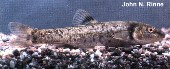
Etymology: Campostoma: Greek, kampe = curved + Greek, stoma = mouth (Ref. 45335); ornatum: Campo=curved and stoma=mouth (in reference to its U-shaped mouth); ornate referring to ornamental coloration of breeding males (Ref. 79012).
More on author: Girard.
Ambiente: milieu / zona climática / intervalo de profundidade / gama de distribuição
Ecologia
; Água doce bentopelágico. Subtropical; 33°N - 25°N
North America: Rio Grande system of Big Bend region in southern Texas, USA; Rucker Canyon and Leslie Creek in extreme southeastern Arizona, USA. Widespread in northern Mexico.
Tamanho / Peso / Idade
Maturidade: Lm ? range ? - ? cm
Max length : 16.0 cm TL macho/indeterminado; (Ref. 86798); common length : 8.3 cm TL macho/indeterminado; (Ref. 12193)
Adults inhabit rocky riffles and adjacent pools of headwaters and creeks (Ref. 86798). Herbivorous, bottom feeder (Contreras-Balderas 1974) feeding mainly on diatoms, bacteria and algae (Ref. 79012). Migratory behaviour is undetermined (Ref. 126106).
Ciclo de vida e comportamento de acasalamento
Maturidade | Reprodução | Desova | Ovos | Fecundidade | Larvas
Adult males construct spawning pits by digging into the gravel with their snouts or mouths and remove small pieces of substrate (Ref. 51088, 31216). Mating occurs in the pits afterwhich the eggs are abandoned (Ref. 51087). Males are highly territorial (Ref. 51087). In other occasions, Campostoma species spawn in nests of Nocomis and Semotilus and with each other as nest associates (Ref. 51087). Also Ref. 51089.
Page, L.M. and B.M. Burr, 2011. A field guide to freshwater fishes of North America north of Mexico. Boston : Houghton Mifflin Harcourt, 663p. (Ref. 86798)
Categoria na Lista Vermelha da IUCN (Ref. 130435: Version 2025-2 (Global))
Ameaça para o homem
Harmless
Utilização humana
Ferramentas
Relatórios especiais
Descarregue XML
Fontes da internet
Estimativas baseadas em modelos
Índice de diversidade filogenética (Ref.
82804): PD
50 = 0.5156 [Uniqueness, from 0.5 = low to 2.0 = high].
Bayesian length-weight: a=0.00537 (0.00266 - 0.01086), b=3.10 (2.92 - 3.28), in cm total length, based on LWR estimates for this (Sub)family-body shape (Ref.
93245).
Resiliência (Ref.
120179): Médio, tempo mínimo de duplicação da população 1,4 - 4,4 anos (Preliminary K or Fecundity.).
Vulnerabilidade da pesca (Ref.
59153): Low vulnerability (10 of 100).
🛈