>
Cypriniformes (Carps) >
Cyprinidae (Minnows or carps) > Cyprininae
Etymology: Scaphognathops: Greek, skaphe, -eos = boat + Greek, gnathos = jaw + Greek, ops = appearance (Ref. 45335).
Eponymy: Dr Leonhard Hess Stejneger (1851–1943) was a Norwegian-born ornithologist and herpetologist who settled in the USA, where he became the USNM’s vertebrate expert. [...] (Ref. 128868), visit book page.
More on author: Smith.
Environnement : milieu / zone climatique / profondeur / gamme de distribution
Écologie
; eau douce benthopélagique; potamodrome (Ref. 51243). Tropical
Asia: Mekong basin in Laos, Thailand, Cambodia and Viet Nam.
Taille / Poids / Âge
Maturité: Lm ? range ? - ? cm
Max length : 25.0 cm SL mâle / non sexé; (Ref. 30857)
Description synthétique
Clés d'identification | Morphologie | Morphométrie
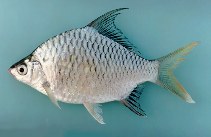
Branched dorsal rays 13-15; branched anal rays 6; narrow mouth with narrow and slender jaw (width 8-10% in head length); fleshy lower lips; pale orange caudal fin in life.
Body shape (shape guide): fusiform / normal.
Occurs in large river habitats (Ref. 12693). Inhabits deep slow reaches during dry season (Ref. 37769). Found in rapid-running mountain streams (Ref. 12975). Not known to migrate, but may probably leave main stream for flooded forests during the periods of high-water. Has not been found in any impoundments. Omnivorous, feeding on detritus and algae along with worms, crustaceans and insects. Marketed fresh (Ref. 12693).
Cycle de vie et comportement reproducteur
Maturité | Reproduction | Frai | Œufs | Fécondité | Larves
Rainboth, W.J., 1996. Fishes of the Cambodian Mekong. FAO species identification field guide for fishery purposes. FAO, Rome, 265 p. (Ref. 12693)
Statut dans la liste rouge de l'IUCN (Ref. 130435: Version 2025-2 (Global))
Menace pour l'homme
Harmless
Utilisations par l'homme
Pêcheries: commercial
Outils
Articles particuliers
Télécharger en XML
Sources Internet
Estimations basées sur des modèles
Indice de diversité phylogénétique (Réf.
82804): PD
50 = 0.6250 [Uniqueness, from 0.5 = low to 2.0 = high].
Bayesian length-weight: a=0.01230 (0.00694 - 0.02182), b=3.00 (2.85 - 3.15), in cm total length, based on LWR estimates for this species & (Sub)family-body (Ref.
93245).
Niveau trophique (Réf.
69278): 2.6 ±0.29 se; based on food items.
Résilience (Réf.
120179): Milieu, temps minimum de doublement de population : 1,4 à 4,4 années (Preliminary K or Fecundity.).
Vulnérabilité de la pêche (Ref.
59153): Low vulnerability (21 of 100).
🛈