أشلاق (القروش و الشفانين) (sharks and rays) >
Orectolobiformes (Carpet sharks) >
Ginglymostomatidae (Nurse sharks)
Etymology: Ginglymostoma: ginglymus (Gr.), hinge; stoma (Gr.), mouth, presumably referring to how corner of mouth has a hinged appearance (See ETYFish); cirratum: Latin for having tendrils, referring to elongated nasal barbels (See ETYFish).
More on author: Bonnaterre.
البيئة: الوسط / المنطقة المناخية / نطاق العمق / نطاق التوزيع
البيئة
بحري; مياه مخلوطة مرتبطة بالشعاب; نطاق العمق 0 - 130 m (Ref. 43278), usually 1 - 35 m (Ref. 40849). Subtropical; 44°N - 35°S, 122°W - 10°E (Ref. 43278)
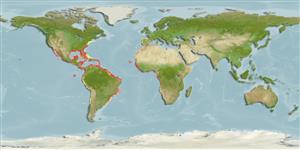
Western Central Atlantic: Rhode Island to southern Brazil (south to Rio de Janeiro), including Gulf of Mexico and Caribbean coasts, although (exceptionally from Rhode Island to Texas), Bermuda; Eastern Central Atlantic: Cape Verde Islands, Senegal, Cameroon to Gabon, and rarely north to Bay of Biscaye, France (ref. 43278). Populations in eastern Pacific refer to Ginglymostoma unami Del Moral-Flores et al., 2015 (Ref. 113902).
الطول عند النضج الأول / الحجم / وزن / العمر
النضج: Lm 235.0, range 230 - 240 cm
Max length : 430 cm TL ذكر/ مختلط الجنس; (Ref. 96339); common length : 304 cm TL ذكر/ مختلط الجنس; (Ref. 247); أعلا وزن تم نشرة: 109.6 kg (Ref. 40637); العمر: 25 سنين (Ref. 72467)
وصف مختصر
مفاتيح التعريف | الوصف الخارجي | قياسات المظهر الخارجي
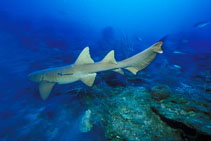
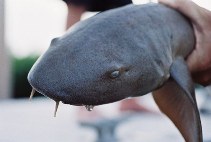
الأشواك الظهرية (المجموع) : 0. Moderately long barbels, nasoral grooves present but no perinasal grooves, mouth well in front of eyes, spiracles minute, precaudal tail shorter than head and body, dorsal fins broadly rounded (the first much larger than the second and anal fins), caudal fin moderately long, over 1/4 of total length, yellow-brown to grey-brown in color, with or without small dark spots and obscure dorsal saddle markings (Ref. 247). Head blunt, mouth inferior, pair of conspicuous barbels between nostrils (Ref. 26938).
Body shape (shape guide): elongated.
Found on continental and insular shelves. Solitary (Ref. 26340) and sluggish fish, often encountered lying on the bottom (Ref. 9987). Nocturnal, feeding on bottom invertebrates such as spiny lobsters, shrimps, crabs, sea urchins, squids, octopi, snails and bivalves, and fishes like catfishes, mullets, puffers and stingrays. Ovoviviparous with 21 to 28 young in a litter (Ref. 9987, 43278). Kept in captivity for researches. May attack humans if they are molested or stepped upon accidentally. Edible, but mainly valued for its hide, which makes extremely tough and durable leather (Ref. 9987). Common over shallow sand flats, in channels, and around coral reefs; young may be found among prop roots of red mangroves (Ref. 26938).
Ovoviviparous, with 21 to 28 young in a litter. Development of young in the uterus being sustained by a large supply of yolk. Females give birth in late spring and summer in waters off Florida. During courtship, a pair sometimes a triplet of adults engaged in synchronized parallel swimming. While on it, the male may grab one of the female's pectoral fins with his mouth which induces the female to pivot 90° and roll on her back on the bottom. Then the male inserts a clasper in her vent, and then roll on his back beside the female. Pair may break apart and depart rapidly after copulation or the male may remain motionless on the subtrate as if recovering from the mating bout (Ref. 49562). Not all attempts of males to copulate with a female nurse shark result in successful fertilization, females may employ avoidance by 'pivotting and rolling' to escape from male attention (Ref. 49562). Or females may 'lie on back' and rest motionless and rigidly on the substrate (Ref. 51113, 49562). On the contrary, females send signals of readiness to copulate with males by arching their body toward their male partner and cupping the pelvic fin (Ref. 51126, 49562). Male nurse sharks may mate with many females over several weeks (polygyny) and vice versa (polyandry) (Ref. 49562). Also Ref. 205.
Compagno, L.J.V., 1984. FAO Species Catalogue. Vol. 4. Sharks of the world. An annotated and illustrated catalogue of shark species known to date. Part 1 - Hexanchiformes to Lamniformes. FAO Fish. Synop. 125(4/1):1-249. Rome, FAO. (Ref. 247)
حالة القائمة الحمراء للاتحاد الدولي لحفظ الطبيعة والموارد الطبيعية (Ref. 130435: Version 2025-2 (Global))
خطر للأنسان
Traumatogenic (Ref. 4690)
استخدامات بشرية
مصائد: غير مهمة تجارياً; لعبة سمكه: نعم; حوض مائي: احواض مائية عامة
أدوات
تقارير خاصة
تنزيل XML
مصادر علي الأنترنت
تقديرات تستند إلى النماذج
درجة الحرارة المفضلة (مرجع
123201): 22.3 - 28, mean 25.5 °C (based on 798 cells).
مؤشر التنوع الشُعبي الوراثي (مرجع
82804): PD
50 = 0.8125 [Uniqueness, from 0.5 = low to 2.0 = high].
Bayesian length-weight: a=0.00417 (0.00158 - 0.01100), b=3.08 (2.85 - 3.31), in cm total length, based on LWR estimates for this (Sub)family-body shape (Ref.
93245).
مستوى غذائي (مرجع
69278): 4.2 ±0.2 se; based on diet studies.
المرونه (مرجع
120179): منخفض, الحد الزمني الأدني لتضاعف عدد أفراد المجتمع 4.5-14 سنة (K=0.14; tmax=25; Fec=21-28).
ضعف الصيد (Ref.
59153): Very high vulnerability (90 of 100).
🛈
قابلية التأثر بالمناخ (Ref.
125649): High vulnerability (65 of 100).
🛈
المغذيات (Ref.
124155): Calcium = 4.11 [0.56, 16.51] mg/100g; Iron = 0.298 [0.069, 0.838] mg/100g; Protein = 20.9 [18.7, 23.0] %; Omega3 = 0.13 [0.05, 0.32] g/100g; Selenium = 23 [6, 71] μg/100g; VitaminA = 10.8 [3.1, 40.2] μg/100g; Zinc = 0.394 [0.186, 0.863] mg/100g (wet weight);