>
Carangiformes (Jacks) >
Carangidae (Jacks and pompanos) > Naucratinae
Etymology: Seriola: Latin word diminutive with the meaning of a large earthenware pot (Ref. 45335).
More on author: Steindachner.
Milieu: milieu / Klimaatzone / Diepte / verspreidingsgebied
Ecologie
marien benthopelagisch. Tropical; 16°N - 3°S
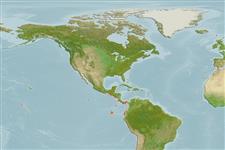
Eastern Pacific: Mexico to Ecuador and the Galapagos Islands.
Grootte / Gewicht / Leeftijd
Maturiteit: Lm ? range ? - ? cm
Max length : 57.0 cm FL mannelijk / geslacht onbekend; (Ref. 9283); common length : 40.0 cm FL mannelijk / geslacht onbekend; (Ref. 9283)
Korte beschrijving
Determinatiesleutels | Morfologie | Morfometrie
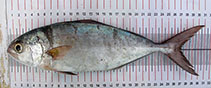
Body slender, elongate, and little compressed; supra-maxillary moderately wide, its posterior end reaching the center of the eye; lower branch of first gill arch with 21 to 23 gill rakers in individuals more than 20cm long; anterior lobe of second dorsal fin moderately deep; lateral line without scutes; caudal peduncle with dorsal and ventral fossae; back violet brown to bluish green; flanks and belly pale; pectoral and caudal fins yellowish; pelvic fins white; dorsal and anal fins mostly dark (Ref. 55763).
Body shape (shape guide): fusiform / normal.
Are benthopelagic in coastal areas (Ref. 9283). Marketed fresh and salted or dried (Ref. 9283).
Levenscyclus en paargedrag
Maturiteit | Voortplanting | Paaien | Eieren | Fecunditeit | Larven
Smith-Vaniz, W.F., 1995. Carangidae. Jureles, pámpanos, cojinúas, zapateros, cocineros, casabes, macarelas, chicharros, jorobados, medregales, pez pilota. p. 940-986. In W. Fischer, F. Krupp, W. Schneider, C. Sommer, K.E. Carpenter and V. Niem (eds.) Guia FAO para Identification de Especies para lo Fines de la Pesca. Pacifico Centro-Oriental. 3 Vols. FAO, Rome. (Ref. 9283)
Status op de Rode Lijst van het IUCN (Ref. 130435: Version 2025-2 (Global))
Gevaar voor de mens
Harmless
Gebruik door de mens
Visserij: van minder commercieel belang; sportvis: ja
Tools
Speciale rapporten
Download XML
Internetbronnen
Schattingen op basis van modellen
Gewenste temperatuur (Ref.
123201): 23.4 - 28.6, mean 27.2 °C (based on 28 cells).
Fylogenetische diversiteitsindex (Ref.
82804): PD
50 = 0.5020 [Uniqueness, from 0.5 = low to 2.0 = high].
Bayesian length-weight: a=0.01445 (0.00633 - 0.03301), b=2.93 (2.74 - 3.12), in cm total length, based on LWR estimates for this (Sub)family-body shape (Ref.
93245).
Trofisch niveau (Ref.
69278): 4.3 ±0.5 se; based on size and trophs of closest relatives
Weerstandsvermogen (Ref.
120179): Gemiddeld, minimale populatieverdubbelingstijd 1,4-4,4 jaar (Preliminary K or Fecundity.).
Kwetsbaarheid van de visserij (Ref.
59153): Moderate to high vulnerability (45 of 100).
🛈