>
Eupercaria/misc (Various families in series Eupercaria) >
Sparidae (Porgies)
Etymology: Diplodus: Greek, diploos = twice + Greek, odous = teeth (Ref. 45335).
More on author: Linnaeus.
Taxonomic Remarks
This subspecies is reported to have no genetic difference between the subspecies Diplodus sargus cadenati. See V.S. Domingues et al. 2007. Journal of Experimental Marine Biology and Ecology 346 (2007):102-113 (F. M. Porteiro, pers.comm. 02/08). Presence in Canary Is. to be reviewed since D. bellottii and D. cadenati are recognized as valid species, not any more as subspecies of D. sargus.
محیط زیست: محیط زیست / منطقه آب و هوایی / تغييرات عمق / محدوده توزیع
بوم شناسي
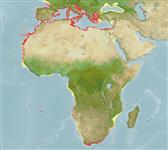
دريايي; لب شور نزديك كف زي; اقیانوس رو (Ref. 51243); تغييرات عمق 0 - 50 m (Ref. 12460), usually 0 - 50 m (Ref. 13780). Subtropical; 48°N - 36°S, 29°W - 42°E
Northeastern Atlantic from Brittany (France) to Gibraltar, and Madeira I.; Mediterranean Sea and southwestern Black Sea.
طول در اولین بلوغ / اندازه / وزن / سن
بلوغ: Lm ?, range 25 - ? cm
Max length : 45.0 cm TL جنس نر / بدون خواص جنسي; (Ref. 3397); common length : 22.0 cm TL جنس نر / بدون خواص جنسي; (Ref. 3397); بيشينه وزن گزارش شده: 1.9 kg (Ref. 40637); بيشينه سن گزارش شده: 10 سال ها (Ref. 26328)
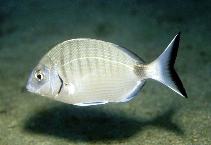
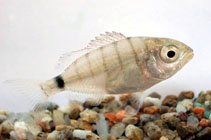
خارهاي باله پشتي (کل) : 11 - 12; شعاع نرم باله پشتي (کل) : 12 - 15; خارهاي باله مخرجي: 3; شعاع نرم باله مخرجي: 11 - 14. Body with 5 black and 4 grey vertical bands. Snout is longer than the eye diameter (Ref. 35388).
Body shape (shape guide): fusiform / normal.
Inhabits coastal rocky reef areas (Ref. 12460) and Posidonia oceanica beds. Like other sparids, it is very active and frequents the surf zone, primarily at dawn (Ref. 13780). Feeds on shellfish and other benthic invertebrates which it picks from the sediment (Ref. 5377).
Sexes separate or protandrous (Ref. 4781). In some areas, this species occurs as a digynic hermaphrodite, that is, males and females developing from intermediate juveniles (Ref. 52202). However, protandry with possible digyny was later confirmed (Ref. 103751). Reaches sexual maturity at 2 years, with an approximate size of 17 cm. Spawning happens from January to March. Egg size 0.8-0.9 mm; larval length at hatching 2.6 mm. Also Ref. 28504.
Bauchot, M.-L., 1987. Poissons osseux. p. 891-1421. In W. Fischer, M.L. Bauchot and M. Schneider (eds.) Fiches FAO d'identification pour les besoins de la pêche. (rev. 1). Méditerranée et mer Noire. Zone de pêche 37. Vol. II. Commission des Communautés Européennes and FAO, Rome. (Ref. 3397)
وضعيت در فهرست قرمز IUCN (Ref. 130435: Version 2025-2 (Global))
خطر برای انسان ها
Harmless
استفاده انسانی
ماهي گيري – شيلات: ارزش تحاري اندك; آبزي پروري: تجاري; ماهي ها ي سرگرم كننده: بله
ابزارها
گزارش های ويژه
بارگيری XML
منابع اينترنتي
تخمینها بر اساس مدلها
دمای ترجیحی (مرجع
123201): 15 - 24.1, mean 18.8 °C (based on 400 cells).
شاخص تنوع فیلوژنتیکی (مرجع
82804): PD
50 = 0.5000 [Uniqueness, from 0.5 = low to 2.0 = high].
Bayesian length-weight: a=0.01202 (0.01074 - 0.01345), b=3.04 (3.01 - 3.07), in cm total length, based on LWR estimates for this species (Ref.
93245).
سطح تروفیک (مرجع
69278): 3.4 ±0.1 se; based on diet studies.
جهندگی (مرجع
120179): متوسط, كمينه زمان لازم براي دو برابر شدن جمعيت 4/1 – 4/4 سال (K=0.11-0.25; tmax=10; tm=2).
Prior r = 0.54, 95% CL = 0.35 - 0.80, Based on 5 data-limited stock assessments.
آسیبپذیری ماهیگیری (Ref.
59153): High vulnerability (57 of 100).
🛈
آسیبپذیری اقلیمی (Ref.
125649): Low to moderate vulnerability (26 of 100).
🛈
مواد مغذی (Ref.
124155): Calcium = 74.5 [38.6, 152.0] mg/100g; Iron = 0.993 [0.559, 1.844] mg/100g; Protein = 19.7 [18.8, 20.6] %; Omega3 = 0.35 [0.20, 0.60] g/100g; Selenium = 20.9 [9.8, 39.7] μg/100g; VitaminA = 15 [5, 42] μg/100g; Zinc = 1.01 [0.69, 1.43] mg/100g (wet weight); based on
nutrient studies.