>
Blenniiformes (Blennies) >
Blenniidae (Combtooth blennies) > Blenniinae
Etymology: Omobranchus: Greek, omo = shoulder + Greek, brangchia = gill (Ref. 45335).
Eponymy: J Wood of Natal, South Africa, collected the blenny holotype along with “many specimens of marine animals”. Unfortunately, the authors give no other information about him. (Ref. 128868), visit book page.
More on authors: Gilchrist & Thompson.
Entorno: milieu / zona climática / rango de profundidad / gama de distribución
Ecología
; salobre demersal. Subtropical
Western Indian Ocean and Southeast Atlantic: Natal to Swartvlei.
Tamaño / Peso / Edad
Madurez: Lm ? range ? - ? cm
Max length : 8.0 cm SL macho / no sexado; (Ref. 4404)
Descripción breve
Claves de identificación | Morfología | Morfometría
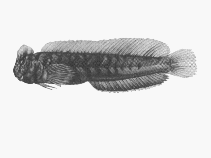
Espinas dorsales (total) : 11 - 13; Radios blandos dorsales (total) : 19 - 21; Espinas anales: 2; Radios blandos anales: 20 - 22. Body with irregular dusky bands anteriorly; dark marks behind eye (Ref. 4404).
Body shape (shape guide): fusiform / normal.
Adults inhabit estuaries. Oviparous. Eggs are demersal and adhesive (Ref. 205), and are attached to the substrate via a filamentous, adhesive pad or pedestal (Ref. 94114). Larvae are planktonic, often found in shallow, coastal waters (Ref. 94114).
Ciclo vital y comportamiento de apareamiento
Madurez | Reproducción | Puesta | Huevos | Fecundidad | Larva
Oviparous, distinct pairing (Ref. 205).
Springer, V.G., 1986. Blenniidae. p. 742-755. In M.M. Smith and P.C. Heemstra (eds.) Smiths' sea fishes. Springer-Verlag, Berlin. (Ref. 4404)
Situación en la Lista Roja de la UICN (Ref. 130435: Version 2025-2 (Global))
Amenaza para el ser humano
Harmless
Usos humanos
Herramientas
Informes especiales
Descargar XML
Fuentes de Internet
Estimaciones basadas en modelos
Índice de diversidad filogenética (Referencia
82804): PD
50 = 0.5000 [Uniqueness, from 0.5 = low to 2.0 = high].
Bayesian length-weight: a=0.01047 (0.00430 - 0.02548), b=3.08 (2.87 - 3.29), in cm total length, based on LWR estimates for this (Sub)family-body shape (Ref.
93245).
Nivel trófico (Referencia
69278): 2.6 ±0.1 se; based on size and trophs of closest relatives
Resiliencia (Referencia
120179): Alto, población duplicada en un tiempo mínimo inferior a 15 meses (Preliminary K or Fecundity.).
Vulnerabilidad pesquera (Ref.
59153): Low vulnerability (10 of 100).
🛈