>
Ophidiiformes (Cusk eels) >
Bythitidae (Livebearing brotulas)
Etymology: Calamopteryx: Greek,kalamos = a reed, a cane, 1712 + Greek, pteryx = fin (Ref. 45335).
Eponymy: Dr William Alonzo Gosline (1915–2002) was an ichthyologist and botanist at the University of Michigan. [...] (Ref. 128868), visit book page.
More on authors: Böhlke & Cohen.
Entorno: milieu / zona climática / rango de profundidad / gama de distribución
Ecología
marino asociado a arrecife; rango de profundidad 9 - 55 m (Ref. 34024). Tropical
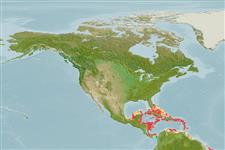
Western Central Atlantic: Bahamas, Grand Cayman Island and Dominica. Antilles (Ref. 26938).
Tamaño / Peso / Edad
Madurez: Lm ? range ? - ? cm
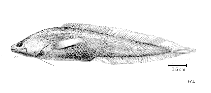
Max length : 6.4 cm SL macho / no sexado; (Ref. 5521)
Uncommon species (Ref. 34024). Inhabits coral reefs and is a live-bearing species (Ref. 5521). Minimum depth reported taken from Ref. 5521.
Ciclo vital y comportamiento de apareamiento
Madurez | Reproducción | Puesta | Huevos | Fecundidad | Larva
Nielsen, J.G., D.M. Cohen, D.F. Markle and C.R. Robins, 1999. Ophidiiform fishes of the world (Order Ophidiiformes). An annotated and illustrated catalogue of pearlfishes, cusk-eels, brotulas and other ophidiiform fishes known to date. FAO Fish. Synop. 125(18):178p. Rome: FAO. (Ref. 34024)
Situación en la Lista Roja de la UICN (Ref. 130435: Version 2025-2 (Global))
Amenaza para el ser humano
Harmless
Usos humanos
Pesquerías: sin interés
Herramientas
Informes especiales
Descargar XML
Fuentes de Internet
Estimaciones basadas en modelos
Temperatura preferida (Referencia
123201): 25.9 - 28, mean 27.5 °C (based on 102 cells).
Índice de diversidad filogenética (Referencia
82804): PD
50 = 0.6250 [Uniqueness, from 0.5 = low to 2.0 = high].
Bayesian length-weight: a=0.00479 (0.00192 - 0.01191), b=3.03 (2.81 - 3.25), in cm total length, based on LWR estimates for this (Sub)family-body shape (Ref.
93245).
Nivel trófico (Referencia
69278): 3.3 ±0.5 se; based on size and trophs of closest relatives
Resiliencia (Referencia
120179): Bajo, población duplicada en un tiempo mínimo de 4.5-14 años (Assuming Fec < 100).
Vulnerabilidad pesquera (Ref.
59153): Low vulnerability (10 of 100).
🛈