البيئة: الوسط / المنطقة المناخية / نطاق العمق / نطاق التوزيع
البيئة
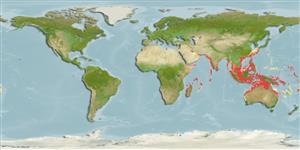
بحري; مياه مخلوطة مرتبطة بالشعاب; نطاق العمق 12 - 100 m (Ref. 55). Tropical; 33°N - 33°S, 43°E - 178°W
Indo-West Pacific: Persian Gulf and Arabian Sea to Fiji, north to southern Japan, south to Australia. This species has been frequently misidentified as Lutjanus sanguineus (Ref. 55). There are unsubstantiated reports of this species from off East Africa.
الطول عند النضج الأول / الحجم / وزن / العمر
النضج: Lm 57.6, range 54 - ? cm
Max length : 100.0 cm TL ذكر/ مختلط الجنس; (Ref. 55); common length : 50.0 cm TL ذكر/ مختلط الجنس; (Ref. 55); أعلا وزن تم نشرة: 7.9 kg (Ref. 4699); العمر: 48 سنين (Ref. 116872)
الأشواك الظهرية (المجموع) : 11; الأشعة الظهرية الناعمة (المجموع) : 12 - 14; شوكة شرجية: 3; أشعه شرجية لينه: 8 - 9. This species is distinguished by the following characters: body relatively deep; greatest depth 2.2-2.8 in SL; mouth large, maxilla length about equal to distance between bases of
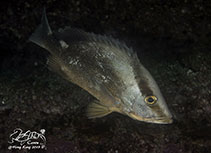
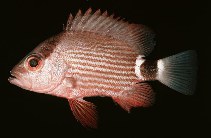
last dorsal- and anal-fin rays; preopercular notch and knob poorly developed; vomerine tooth patch crescentic or triangular, without a medial posterior extension; gill rakers of first gill arch 4-7 + 12-14 = 18-20 (including rudiments); caudal fin truncate. Colour of back and sides red or red-orange, lighter on lower parts; fins reddish; juveniles with a broad, oblique band of brown or black from upper jaw to beginning of dorsal fin, and a prominent black band across caudal peduncle with a pearly white anterior border, similar to L. timorensis but without the black pectoral-fin axil; young also with a series of narrow reddish horizontal lines (sometimes absent) on sides (Ref. 9821, 90102).
Body shape (shape guide): fusiform / normal; Cross section: oval.
Adults inhabit both coastal and offshore reefs. They tend to be associated with sponge and gorgonian-dominated habitats on the North West Shelf (Ref. 28006), and hard mud areas of the Arafura Sea. In Australia, they frequently form mixed shoals with L. erythropterus. Juveniles tend to inhabit shallow inshore waters and larger fish live in deeper waters (Ref. 27260, 27264). Juveniles also occur in mangrove areas and seagrass beds (Ref. 128523). Feed mainly on fishes, with small amounts of benthic crustaceans, cephalopods and other benthic invertebrates (Ref. 6390). They forage mostly at night (Ref. 6390). Caught mainly with handlines, bottom longlines, and bottom trawls (Ref. 9821). Marketed fresh, dried-salted (Ref. 55) and frozen (Ref. 9987).
Are batch or serial spawners (Ref. 28009).
Allen, G.R., 1985. FAO Species Catalogue. Vol. 6. Snappers of the world. An annotated and illustrated catalogue of lutjanid species known to date. FAO Fish. Synop. 125(6):208 p. Rome: FAO. (Ref. 55)
حالة القائمة الحمراء للاتحاد الدولي لحفظ الطبيعة والموارد الطبيعية (Ref. 130435: Version 2025-2 (Global))
استخدامات بشرية
مصائد: ذو قيمة تاجرية عالية; لعبة سمكه: نعم; حوض مائي: تجاري
أدوات
تقارير خاصة
تنزيل XML
مصادر علي الأنترنت
تقديرات تستند إلى النماذج
درجة الحرارة المفضلة (مرجع
123201): 23.8 - 28.6, mean 27.5 °C (based on 745 cells).
مؤشر التنوع الشُعبي الوراثي (مرجع
82804): PD
50 = 0.5000 [Uniqueness, from 0.5 = low to 2.0 = high].
Bayesian length-weight: a=0.01585 (0.01418 - 0.01771), b=2.97 (2.95 - 2.99), in cm total length, based on LWR estimates for this species (Ref.
93245).
مستوى غذائي (مرجع
69278): 4.5 ±0.5 se; based on diet studies.
Generation time: 6.1 (4.2 - 8.7) years. Estimated as median ln(3)/K based on 24
growth studies.
المرونه (مرجع
120179): منخفظ جدا, الحد الزمني الأدني لتضاعف عدد أفراد المجتمع أكثر من 14 سنة (K=0.12-0.18; tmax=48; Fec=5,000,000).
Prior r = 0.17, 95% CL = 0.11 - 0.25, Based on 1 full stock assessment.
ضعف الصيد (Ref.
59153): High vulnerability (60 of 100).
🛈
قابلية التأثر بالمناخ (Ref.
125649): Very high vulnerability (88 of 100).
🛈
المغذيات (Ref.
124155): Calcium = 18.9 [11.4, 28.8] mg/100g; Iron = 0.279 [0.178, 0.460] mg/100g; Protein = 18.8 [17.3, 20.2] %; Omega3 = 0.134 [0.092, 0.196] g/100g; Selenium = 69.5 [40.5, 114.1] μg/100g; VitaminA = 179 [31, 733] μg/100g; Zinc = 0.374 [0.285, 0.518] mg/100g (wet weight); based on
nutrient studies.