Περιβάλλον: περιβάλλον / κλιματική ζώνη / εύρος βάθους / εύρος διανομής
Οικολογία
Θαλασσινό(ά) Υφαλόφιλο(α); μη μεταναστευτικό(ά); εύρος βάθους 10 - 300 m (Ref. 9790). Tropical
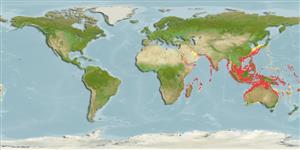
Indo-West Pacific: widespread, from the New Hebrides to Papua New Guinea, north to Taiwan, through Indonesia to Thailand, Pakistan, the Red Sea, and South Africa. Replaced by Cociella crocodilus from southern China to Japan and by Cociella hutchinsi in northern Australia (Ref. 37816).
Μέγεθος / Βάρος / Ηλικία
Γεννητική Ωρίμανση: Lm ? range ? - ? cm
Max length : 35.0 cm TL αρσενικό/απροσδιόριστο; (Ref. 9790); common length : 25.0 cm TL αρσενικό/απροσδιόριστο; (Ref. 9790)
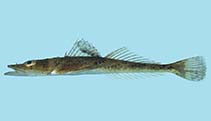
Ραχιαίες άκανθες (συνολικά) : 9; Μαλακές ραχιαίες ακτίνες (συνολικά) : 10 - 12; Εδρικές άκανθες: 0; Μαλακές εδρικές ακτίνες: 11 - 12. Uppermost preopercular spine reaching only about half-way to the opercular margin. Preorbital spine present. Infraorbital ridge usually smooth over anterior 1/2 of eye. Suborbital ridge lacking spines behind eye. Interopercular flap present. Iris lappet simple, semicircular. Numerous small dark spots on back reaching to below the lateral line, more widely scattered posteriorly. Has 5-6 dark bands across the back, but small juveniles may have only a broad saddle crossing the spinous dorsal fin and a narrow one near the rear of the soft dorsal fin (Ref. 37816).
Body shape (shape guide): elongated.
Frequents shallow areas in depths of 10 m or less. Taken in trawl fisheries at depths from 23 to 250 m. Reported from a trap in the Gulf of Aqaba at a depth of 300 m. Young to juvenile stages utilize mangrove habitat (Ref. 9790). Adults occur in silty sand habitats from the shallows to a depth of 300 m (Ref. 37816). Also found in coastal sand patches, near coral reefs but more often on offshore (Ref 90102).
Κύκλος ζωής και συμπεριφορά ζευγαρώματος
Γεννητική Ωρίμανση | Αναπαραγωγή | Γεννοβολία | Αβγά | Γονιμότητα | Προνύμφες
Knapp, L.W., 1999. Platycephalidae. Flatheads. p. 2385-2421. In K.E. Carpenter and V.H. Niem (eds.) FAO species identification guide for fishery purposes. The living marine resources of the Western Central Pacific. Volume 4. Bony fishes part 2 (Mugilidae to Carangidae). FAO, Rome. (Ref. 9790)
Κατάσταση Κόκκινου Καταλόγου IUCN (Ref. 130435: Version 2025-2 (Global))
Απειλή για τον άνθρωπο
Harmless
Ανθρώπινες χρήσεις
αλιεία: περιορισμένης εμπορικότητας
Εργαλεία
Ειδικές εκθέσεις
Λήψη XML
Διαδικτυακές πηγές
Εκτιμήσεις βάσει μοντέλων
Προτιμώμενη θερμοκρασία (Αναφ.
123201): 18.8 - 28.1, mean 25.6 °C (based on 1088 cells).
Δείκτης φυλογενετικής ποικιλότητας (Αναφ.
82804): PD
50 = 0.5312 [Uniqueness, from 0.5 = low to 2.0 = high].
Bayesian length-weight: a=0.00427 (0.00219 - 0.00832), b=3.11 (2.94 - 3.28), in cm total length, based on LWR estimates for this (Sub)family-body shape (Ref.
93245).
Τροφικό Επίπεδο (Αναφ.
69278): 3.8 ±0.7 se; based on size and trophs of closest relatives
Ελαστικότητα (Αναφ.
120179): Μεσαίο(α), ελάχιστος χρόνος για διπλασιασμό πληθυσμού 1,4 - 4,4 έτη (Preliminary K or Fecundity.).
Ευπάθεια στην αλιεία (Ref.
59153): Low vulnerability (25 of 100).
🛈
Θρεπτικά συστατικά (Ref.
124155): Calcium = 48.7 [24.6, 138.2] mg/100g; Iron = 0.602 [0.280, 1.395] mg/100g; Protein = 17.8 [15.8, 19.9] %; Omega3 = 0.164 [0.071, 0.465] g/100g; Selenium = 54.3 [25.3, 141.5] μg/100g; VitaminA = 80.2 [28.8, 224.0] μg/100g; Zinc = 1.08 [0.69, 1.65] mg/100g (wet weight);