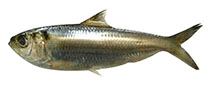
>
Clupeiformes (Herrings) >
Dorosomatidae (Gizzard shads and sardinellas)
Etymology: Sardinella: Latin and Greek, sarda = sardine; name related to the island of Sardinia; diminutive (Ref. 45335); tawilis: tawilis is a local tagalog name (Ref. 2930).
More on author: Herre.
Περιβάλλον: περιβάλλον / κλιματική ζώνη / εύρος βάθους / εύρος διανομής
Οικολογία
; Γλυκού νερού Πελαγικό(ά); μη μεταναστευτικό(ά). Tropical; 18°N - 14°N
Asia: endemic to Lake Taal (formerly Lake Bombon), Luzon, Philippines. This freshwater lake, linked to the sea via the Pansipit River, was part of Balayan Bay, South China Sea, and was formed by a series of volcanic eruptions in the 18th century (Ref. 5522).
Μήκος κατά την πρώτη ωρίμανση / Μέγεθος / Βάρος / Ηλικία
Γεννητική Ωρίμανση: Lm 7.9 range ? - ? cm
Deprecated: number_format(): Passing null to parameter #1 ($num) of type float is deprecated in /var/www/html/includes/common.lib.php on line 1833
Max length : 12.0 cm TL αρσενικό/απροσδιόριστο; (Ref. 5520); 15.2 cm TL (female); μεγ. δημοσιευμένο βάρος: 0.00 g
Σύντομη περιγραφή
Κλείδες προσδιορισμού | Μορφολογία | Μορφομετρία
Ραχιαίες άκανθες (συνολικά) : 0; Μαλακές ραχιαίες ακτίνες (συνολικά) : 15 - 18; Εδρικές άκανθες: 0; Μαλακές εδρικές ακτίνες: 18 - 21; Σπόνδυλοι: 39 - 42. Total scutes 28 to 30. gill rakers slender, long and numerous (Ref. 5520).
Body shape (shape guide): fusiform / normal; Cross section: compressed.
Inhabits lakes. This is the only species of Sardinella that is apparently found only, or even mainly, in freshwater. Presumably schooling. Also caught using ring nets (Ref. 5520). Mainly caught by gill net, beach seine, ring net and motorized push net (Refs.81494, 80728, 5520). Eaten fresh or dried (Ref. 5517). Is threatened by overfishing (Ref. 6308).
Whitehead, P.J.P., 1985. FAO Species Catalogue. Vol. 7. Clupeoid fishes of the world (suborder Clupeoidei). An annotated and illustrated catalogue of the herrings, sardines, pilchards, sprats, shads, anchovies and wolf-herrings. FAO Fish. Synop. 125(7/1):1-303. Rome: FAO. (Ref. 188)
Κατάσταση Κόκκινου Καταλόγου IUCN (Ref. 130435: Version 2025-2 (Global))
Endangered (EN) (A2bd; B1ab(iii,v)+2ab(iii,v)); Date assessed: 28 February 2017
Απειλή για τον άνθρωπο
Harmless
Ανθρώπινες χρήσεις
αλιεία: παραδοσιακή αλιεία
Εργαλεία
Ειδικές εκθέσεις
Λήψη XML
Διαδικτυακές πηγές
Εκτιμήσεις βάσει μοντέλων
Δείκτης φυλογενετικής ποικιλότητας (Αναφ.
82804): PD
50 = 0.5000 [Uniqueness, from 0.5 = low to 2.0 = high].
Bayesian length-weight: a=0.00832 (0.00471 - 0.01469), b=2.98 (2.83 - 3.13), in cm total length, based on LWR estimates for this species & Genus-body shape (Ref.
93245).
Τροφικό Επίπεδο (Αναφ.
69278): 3.0 ±0.0 se; based on diet studies.
Ελαστικότητα (Αναφ.
120179): Υψηλό, ελάχιστος χρόνος για διπλασιασμό πληθυσμού < 15 μήνες (Preliminary K or Fecundity.).
Ευπάθεια στην αλιεία (Ref.
59153): Low vulnerability (22 of 100).
🛈