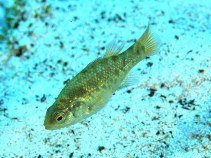
Entorno: milieu / zona climática / rango de profundidad / gama de distribución
Ecología
; agua dulce bentopelágico. Temperate; 10°C - 30°C (Ref. 2060)
Oceania: endemic to Australia.
Longitud en la primera madurez / Tamaño / Peso / Edad
Madurez: Lm 3.3 range ? - ? cm
Max length : 8.5 cm TL macho / no sexado; (Ref. 44894); common length : 6.0 cm SL macho / no sexado; (Ref. 44894)
Occurs in lotic and lentic freshwater bodies (Ref. 7300). Inhabits vegetated margins of streams, billabongs, drains, dams and swamps in still or gently flowing water. Forms small groups and is a very common prey item for introduced fishes, such as the Redfin perch and trout. Feeds on small crustaceans, insects and their larvae. Breeds from September to January, when water temperatures rise above 16°C. Reproductive habits and biology are typical of the family. Maximum life expectancy is about 5 years (Ref. 44894).
Paxton, J.R., D.F. Hoese, G.R. Allen and J.E. Hanley, 1989. Pisces. Petromyzontidae to Carangidae. Zoological Catalogue of Australia, Vol. 7. Australian Government Publishing Service, Canberra, 665 p. (Ref. 7300)
Situación en la Lista Roja de la UICN (Ref. 130435: Version 2025-2 (Global))
Amenaza para el ser humano
Harmless
Usos humanos
Herramientas
Informes especiales
Descargar XML
Fuentes de Internet
Estimaciones basadas en modelos
Índice de diversidad filogenética (Referencia
82804): PD
50 = 0.5156 [Uniqueness, from 0.5 = low to 2.0 = high].
Bayesian length-weight: a=0.01047 (0.00397 - 0.02763), b=3.01 (2.78 - 3.24), in cm total length, based on LWR estimates for this (Sub)family-body shape (Ref.
93245).
Nivel trófico (Referencia
69278): 3.2 ±0.4 se; based on size and trophs of closest relatives
Generation time: 1.8 ( na - na) years. Estimated as median ln(3)/K based on 1
growth studies.
Resiliencia (Referencia
120179): Medio, población duplicada en un tiempo mínimo de 1.4-4.4 años (tmax=5; Fec=78-679 (batch fecundity)).
Vulnerabilidad pesquera (Ref.
59153): Low vulnerability (23 of 100).
🛈