>
Acropomatiformes (Oceanic basses) >
Epigonidae (Deepwater cardinalfishes)
Etymology: Epigonus: Greek, epi = over, in front + Greek, gonio = angle (Ref. 45335).
Umwelt: Milieu / Klimazone / Tiefenbereich / Verbreitungsgebiet
Ökologie
seewasser bathydemersal; tiefenbereich 550 - 1300 m (Ref. 31632). Deep-water
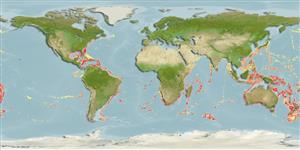
Indo-Pacific: Tanzania to Viet Nam (Ref. 31632), Indonesia (Ref. 26165) and western Australia. Western Atlantic: Florida, USA (Ref. 31632) to Suriname and French Guiana (Ref. 13608).
Größe / Gewicht / Alter
Geschlechtsreife: Lm ? range ? - ? cm
Max length : 21.2 cm SL Männchen/unbestimmt; (Ref. 26165)
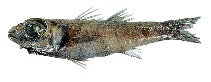
No opercular spines. 8 spines on first dorsal fin. Pyloric caeca 7-8 (light organ present in one of the caeca). Premaxillary teeth elongated, thin, remain visible when mouth closed (Ref. 31632).
Body shape (shape guide): fusiform / normal.
A mesobenthic-pelagic species living mainly above the bottom (Ref. 31632). Found on the continental slope (Ref. 7300).
Lebenszyklus und Paarungsverhalten
Geschlechtsreife | Fortpflanzung | Ablaichen | Eier | Fruchtbarkeit | Larven
Paxton, J.R., D.F. Hoese, G.R. Allen and J.E. Hanley, 1989. Pisces. Petromyzontidae to Carangidae. Zoological Catalogue of Australia, Vol. 7. Australian Government Publishing Service, Canberra, 665 p. (Ref. 7300)
IUCN Rote Liste Status (Ref. 130435: Version 2025-2 (Global))
Bedrohung für Menschen
Harmless
Nutzung durch Menschen
Fischereien: kommerzielles potential
Tools
Zusatzinformationen
Download XML
Internet Quellen
Schätzungen auf der Grundlage von Modellen
Bevorzugte Temperatur (Ref.
123201): 2.9 - 9.6, mean 6.3 °C (based on 555 cells).
Phylogenetischer Diversitätsindex (Ref.
82804): PD
50 = 0.5000 [Uniqueness, from 0.5 = low to 2.0 = high].
Bayesian length-weight: a=0.01202 (0.00571 - 0.02532), b=3.02 (2.84 - 3.20), in cm total length, based on LWR estimates for this Genus-body shape (Ref.
93245).
Trophische Ebene (Ref.
69278): 3.5 ±0.5 se; based on size and trophs of closest relatives
Widerstandsfähigkeit (Ref.
120179): mittel, Verdopplung der Population dauert 1,4 - 4,4 Jahre. (Preliminary K or Fecundity.).
Anfälligkeit der Fischerei (Ref.
59153): Low vulnerability (16 of 100).
🛈