>
Clupeiformes (Herrings) >
Ehiravidae (River sprats)
Etymology: Clupeonella: Latin, clupea = sardine, derived from Clupeus = shield; diminutive (Ref. 45335); cultriventris: "cultiventris" is taken from the Latin word, culter, meaning to cultivate. The ventral area of this fish is in the shape of a coulter, a vertical iron cutting blade fixed in front of a ploughshare (Ref. 72389).
البيئة: الوسط / المنطقة المناخية / نطاق العمق / نطاق التوزيع
البيئة
بحري; المياه العذبة; مياه مخلوطة pelagic-neritic; أسماك صاعدة (Ref. 51243); نطاق العمق 10 - 13 m (Ref. 10535). Temperate; 60°N - 36°N, 27°E - 56°E
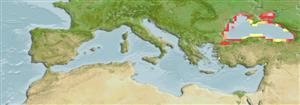
Eurasia: Black Sea (northwestern parts), Sea of Azov and Caspian Sea, also most of the affluent rivers of the area, reaching as far as 60 km inland. Also, Lake Palaeostomi (Bulgaria) and in Bay of Feodosiya (Romania), also Lake Apolyont (Turkey) (Ref. 188). Previously, two subspecies were recognized by some: Clupeonella cultriventris cultriventris (Nordmann, 1840) from the Black Sea and the Sea of Azov and Clupeonella cultriventris caspia (Svetovidov, 1941) from the Caspian Sea (Ref. 26334, 39702).
الحجم / وزن / العمر
النضج: Lm ? range ? - ? cm
Max length : 14.5 cm TL ذكر/ مختلط الجنس; (Ref. 72389); common length : 10.0 cm SL ذكر/ مختلط الجنس; (Ref. 188); العمر: 5 سنين (Ref. 10535)
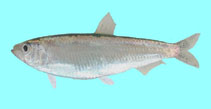
الأشواك الظهرية (المجموع) : 0; الأشعة الظهرية الناعمة (المجموع) : 13 - 21; شوكة شرجية: 0; أشعه شرجية لينه: 12 - 23. Head short and wide; belly sharply keeled, with 24 to 29 scutes; pectoral fin tips pointed; last 2 anal fin rays enlarged; pterotic bulla absent; no notch at the center of the upper jaw. Based on pelvic and pectoral fin length, Svetovidov (1952 and 1963) recognized 2 subspecies: C. cultriventris cultriventris with longer pectoral and pelvic fins compared to that of C. cultriventris caspia.
Body shape (shape guide): fusiform / normal; Cross section: compressed.
Essentially a brackish water species but tolerating salinities up to 34 ppt and with semi-anadromous and purely freshwater forms in rivers and lakes. Forms schools. Migratory between winter or autumn feeding and summer spawning grounds. Feeds on zooplankton (Ref. 188); crustaceans such as copepods and cladocerans (Ref. 59043). Breeds in early summer in the Sea of Azov with a peak in May, and from about May in the lower reaches of rivers (e.g. Dneiper and Dneister) (Ref. 188). Eggs are pelagic (Ref. 59043).
Whitehead, P.J.P., 1985. FAO Species Catalogue. Vol. 7. Clupeoid fishes of the world (suborder Clupeoidei). An annotated and illustrated catalogue of the herrings, sardines, pilchards, sprats, shads, anchovies and wolf-herrings. FAO Fish. Synop. 125(7/1):1-303. Rome: FAO. (Ref. 188)
حالة القائمة الحمراء للاتحاد الدولي لحفظ الطبيعة والموارد الطبيعية (Ref. 130435: Version 2025-2 (Global))
استخدامات بشرية
مصائد: ذو قيمة تاجرية عالية
أدوات
تقارير خاصة
تنزيل XML
مصادر علي الأنترنت
تقديرات تستند إلى النماذج
درجة الحرارة المفضلة (مرجع
123201): 13.5 - 16.5, mean 14.8 °C (based on 130 cells).
مؤشر التنوع الشُعبي الوراثي (مرجع
82804): PD
50 = 0.5078 [Uniqueness, from 0.5 = low to 2.0 = high].
Bayesian length-weight: a=0.00759 (0.00359 - 0.01605), b=3.06 (2.87 - 3.25), in cm total length, based on LWR estimates for this species & (Sub)family-body (Ref.
93245).
مستوى غذائي (مرجع
69278): 3.0 ±0.0 se; based on diet studies.
المرونه (مرجع
120179): وسيط, الحد الزمني الأدني لتضاعف عدد أفراد المجتمع 1.4-4.4 سنة (K=0.2-1.1(?); tm=2-3; tmax=5; Fec=5,220-20,110).
ضعف الصيد (Ref.
59153): Moderate vulnerability (35 of 100).
🛈
قابلية التأثر بالمناخ (Ref.
125649): High vulnerability (60 of 100).
🛈
المغذيات (Ref.
124155): Calcium = 39.7 [14.4, 148.7] mg/100g; Iron = 0.303 [0.112, 1.137] mg/100g; Protein = 18.6 [16.8, 20.6] %; Omega3 = 0.937 [0.472, 1.929] g/100g; Selenium = 2.05 [0.71, 7.26] μg/100g; VitaminA = 46 [15, 144] μg/100g; Zinc = 0.597 [0.351, 1.704] mg/100g (wet weight); based on
nutrient studies.