Sebastes viviparus, Norway redfish : fisheries

You can sponsor this page

Sebastes viviparus Krøyer, 1845

Norway redfish
Aggiungete la vostra osservazione in Fish Watcher
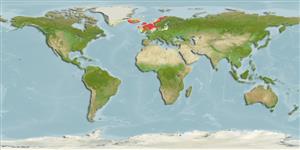
Native range
This map was computer-generated and has not yet been reviewed.
Sebastes viviparus   AquaMaps   Data sources: GBIF OBIS
Carica il tuo foto e Video
Immagini | Video | Google image
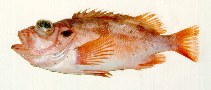
Image of Sebastes viviparus (Norway redfish)
Sebastes viviparus
Immagine di Dolgov, A.

Classificazione / Nomi Nomi Comuni | Sinonimi | Catalog of Fishes(Genere, Specie) | ITIS | CoL | WoRMS | Cloffa

> Perciformes/Scorpaenoidei (Scorpionfishes) > Sebastidae (Rockfishes, rockcods and thornyheads) > Sebastinae
Etymology: Sebastes: Greek, sebastes = august, venerable (Ref. 45335).

Ambiente: milieu / zona climatica / distribuzione batimetrica / gamma di distribuzione Ecologia

marino demersale; distribuzione batimetrica 50 - 300 m (Ref. 35388). Temperate; 71°N - 50°N, 50°W - 21°E

Distribuzione Territories | Aree FAO | Ecosistemi | Presenze | Mappa dei ritrovamenti | Introduzioni | Faunafri

Northeast Atlantic: Norwegian coast from Kattegat to Tanafjord in Finnmark, rare off Bear Island, northern part of North Sea, around Shetland Islands, Scotland, northern England, Wales and Ireland, rare in the English Channel; Rockall Bank, common around Faroes and Iceland; sporadic off East Greenland.

Lunghezza alla prima maturità / Dimensione / Peso / Età

Maturità: Lm 12.5, range 10 - 15 cm
Max length : 66.5 cm TL maschio/sesso non determinato; (Ref. 106276); common length : 25.0 cm TL maschio/sesso non determinato; (Ref. 4570); peso massimo pubblicato: 1.0 kg (Ref. 35388); Età massima riportata: 40 anni (Ref. 35388)

Breve descrizione Chiavi di identificazione | Morfologia | Morfometria


Body shape (shape guide): short and / or deep.

Biologia     Glossario (es. epibenthic)

Inhabit rocky bottoms, close to the shore, between 10 and 150 m, but also recorded at 760 m (Ref. 4570). Live in shoals and moves closer to the shore in the summer (Ref. 35388). Feed on various small crustaceans and young fishes (Ref. 4570). Viviparous (Ref. 34817).

Ciclo vitale e comportamento di accoppiamento Maturità | Riproduzione | Deposizione | Uova | Fecondità | Larve

Ovoviviparous.

Riferimento principale Caricare le referenze | Bibliografia | Coordinatore | Collaboratori

Wheeler, A., 1992. A list of the common and scientific names of fishes of the British Isles. J. Fish Biol. 41(suppl.A):1-37. (Ref. 5204)

Stato della Lista Rossa IUCN (Ref. 130435: Version 2025-2 (Global))


CITES

Not Evaluated

CMS (Ref. 116361)

Not Evaluated

Minaccia per l'uomo

  Harmless


Usi umani

Pesca: commerciale
FAO - pesca: sbarchi; Publication: search | FishSource | Sea Around Us

Informazioni ulteriori

Ecologia trofica
Articoli alimentari (prede)
Alimentazione
Consumo di cibo
Razioni alimentari
Predatori
Ecologia
Ecologia
Dinamica della popolazione
Parametri di crescita
Età massima / dimensioni massime
Rapporto lunghezza-peso.
Lunghezza-lunghezza rel.
Lunghezza-frequenze
Conversione di massa
Reclutamento
Abbondanza
Ciclo di vita
Riproduzione
Maturità
Maturità/Gli occhielli sono relativi.
Fecondità
Deposizione
Aggregazioni riproduttive
Uova
Sviluppo delle uova
Larve
Dinamica popolazioni larvali
Distribuzione
Territories
Aree FAO
Ecosistemi
Presenze
Introduzioni
BRUVS - Video
Anatomia
Area branchiale
Cervello
Otolite
Fisiologia
Composizione corporea
Nutrienti
Consumo di ossigeno
Tipo di nuoto
Velocità di nuoto
Pigmenti visivi
Suono del pesce
Malattie e parassiti
Tossicità (LC50)
Genetica
Genome
Genetica
Eterozigosi
Ereditarietà
Diversità genetica
Legato all'uomo
Sistemi di acquacoltura
Profili di acquacoltura
Varietà
Casi di Ciguatera
Francobolli, monete, materiale vario.
Raggiungimento
Collaboratori
Tassonomia
Nomi Comuni
Sinonimi
Morfologia
Morfometria
Immagini
Bibliografia
Bibliografia

Strumenti

Rapporti speciali

Scarica XML

Fonti Internet

AFORO (otoliths) | Aquatic Commons | BHL | Cloffa | Websites from users | Check FishWatcher | CISTI | Catalog of Fishes: Genere, Specie | DiscoverLife | ECOTOX | FAO - pesca: sbarchi; Publication: search | Faunafri | Fishipedia | Fishtrace | GloBI | Google Books | Google Scholar | Google | IGFA World Record | Database Nazionali | OneZoom | Open Tree of Life | Otolith Atlas of Taiwan Fishes | Acquari pubblici | PubMed | Reef Life Survey | Socotra Atlas | TreeBase | Tree of Life | Wikipedia: Go, ricerca | World Records Freshwater Fishing | Zoobank | Record zoologico

Stime basate su modelli

Temperatura preferita (Fonte Biblio. 123201): 6.8 - 9.8, mean 7.8 °C (based on 186 cells).
Indice di diversità filogenetica (Fonte Biblio. 82804):  PD50 = 0.5000   [Uniqueness, from 0.5 = low to 2.0 = high].
Bayesian length-weight: a=0.01148 (0.00733 - 0.01797), b=3.05 (2.92 - 3.18), in cm total length, based on LWR estimates for this species & Genus-body shape (Ref. 93245).
Livello trofico (Fonte Biblio. 69278):  4.0   ±0.67 se; based on food items.
Generation time: 15.7 ( na - na) years. Estimated as median ln(3)/K based on 1 growth studies.
Resilienza (Fonte Biblio. 120179):  Molto basso, tempo minimo di raddoppiamento della popolazione più di 14 anni (K=0.07; tm=20; tmax=40).
Vulnerabilità della pesca (Ref. 59153):  High to very high vulnerability (71 of 100). 🛈
Vulnerabilità climatica (Ref. 125649):  High to very high vulnerability (71 of 100). 🛈
Categoria di prezzo (Ref. 80766):   Medium.
Nutrienti (Ref. 124155):  Calcium = 16 [7, 45] mg/100g; Iron = 0.175 [0.079, 0.422] mg/100g; Protein = 17.7 [16.5, 19.1] %; Omega3 = 0.883 [0.338, 2.408] g/100g; Selenium = 43.3 [17.5, 116.9] μg/100g; VitaminA = 10.7 [2.4, 47.4] μg/100g; Zinc = 0.331 [0.174, 0.567] mg/100g (wet weight);