Taxonomic Remarks
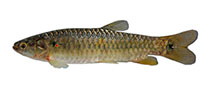
No recent study. The body is stocky with a dark spot just behind the head and another at the base of the caudal fin. All lebiasinids are mainly insectivorous feeding generally near the surface of the water. Lebiasina bimaculata especially has been used in the control of mosquitoes. Thus it has been introduced into regions where it was not native. Its original distribution was in the coastal streams between the Lima area of central Peru north to northern Ecuador. It also occurs inland at higher elevations in the Cajamarca region of central Peru. Pearson (1937: 89) remarks that this fish can live for a long time in a minimum quantity of water and that pre Inca people could easily have carried this fish from the coast up into the Cajamarca valley where it has adapted and spread into the upper Marañon River. Marilyn Weitzman, pers. comm., Eschmeyer, 1998:229; Ortega and Vari, 1986:10.
Environnement : milieu / zone climatique / profondeur / gamme de distribution
Écologie
; eau douce benthopélagique; pH range: 6.2 - 7.5; dH range: ? - 25. Tropical; 22°C - 26°C (Ref. 2059)
South America: Ecuador and Peru west of the Andes; also Marañon River basin.
Taille / Poids / Âge
Maturité: Lm ? range ? - ? cm
Max length : 16.0 cm SL mâle / non sexé; (Ref. 37104)
Facultative air-breathing (Ref. 126274); Used as a mosquito control (Ref. 26543).
Cycle de vie et comportement reproducteur
Maturité | Reproduction | Frai | Œufs | Fécondité | Larves
Weitzman, M. and S.H. Weitzman, 2003. Lebiasinidae (Pencil fishes). p. 241-251. In R.E. Reis, S.O. Kullander and C.J. Ferraris, Jr. (eds.) Checklist of the Freshwater Fishes of South and Central America. Porto Alegre: EDIPUCRS, Brasil. (Ref. 37104)
Statut dans la liste rouge de l'IUCN (Ref. 130435: Version 2025-2 (Global))
Menace pour l'homme
Harmless
Utilisations par l'homme
Pêcheries: commercial; Aquarium: Commercial; appât: occasionally
Outils
Articles particuliers
Télécharger en XML
Sources Internet
Estimations basées sur des modèles
Indice de diversité phylogénétique (Réf.
82804): PD
50 = 0.5000 [Uniqueness, from 0.5 = low to 2.0 = high].
Bayesian length-weight: a=0.01122 (0.00514 - 0.02450), b=3.04 (2.87 - 3.21), in cm total length, based on all LWR estimates for this body shape (Ref.
93245).
Niveau trophique (Réf.
69278): 3.6 ±0.4 se; based on size and trophs of closest relatives
Vulnérabilité de la pêche (Ref.
59153): Low vulnerability (10 of 100).
🛈
Nutriments (Ref.
124155): Calcium = 137 [48, 313] mg/100g; Iron = 1.47 [0.73, 3.27] mg/100g; Protein = 17.8 [15.9, 19.9] %; Omega3 = 0.533 [0.189, 1.477] g/100g; Selenium = 63.6 [27.0, 153.0] μg/100g; VitaminA = 83.1 [30.9, 199.6] μg/100g; Zinc = 2.47 [1.71, 3.49] mg/100g (wet weight);