>
Atheriniformes (Silversides) >
Atherinidae (Silversides) > Craterocephalinae
Etymology: Craterocephalus: Greek, krater, -eros = bowl, mixing vessel + Greek, kephale = head (Ref. 45335).
More on author: Steindachner.
Entorno: milieu / zona climática / rango de profundidad / gama de distribución
Ecología
; agua dulce; salobre bentopelágico. Temperate; 24°C - 30°C (Ref. 2060); 23°S - 36°S
Oceania: Lake Eyre Basin, South Australia.
Tamaño / Peso / Edad
Madurez: Lm ? range ? - ? cm
Max length : 10.0 cm TL macho / no sexado; (Ref. 2158)
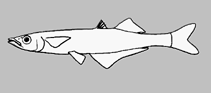
Inhabits swamps, ponds, lakes, rivers, streams and lagoons. Common throughout its range, usually among weeds and over gravel beds in lakes or slow-flowing sections of streams. Occurs in both turbid and clear water: 0-110ppt, 10°-37°C. Also found in ephemeral rivers, streams, natural springs, salt lakes and man-made bores, usually around submerged vegetation over gravel substrates. Seeks refuge in bores and semi-permanent waterholes during droughts. Feeds on microcrustaceans. Breeds from January to March, and also opportunistically during floods. Important in the diet of many waterbirds including herons, cormorants and pelicans (Ref. 44894).
Ciclo vital y comportamiento de apareamiento
Madurez | Reproducción | Puesta | Huevos | Fecundidad | Larva
Paxton, J.R., D.F. Hoese, G.R. Allen and J.E. Hanley, 1989. Pisces. Petromyzontidae to Carangidae. Zoological Catalogue of Australia, Vol. 7. Australian Government Publishing Service, Canberra, 665 p. (Ref. 7300)
Situación en la Lista Roja de la UICN (Ref. 130435: Version 2025-2 (Global))
Amenaza para el ser humano
Harmless
Usos humanos
Herramientas
Informes especiales
Descargar XML
Fuentes de Internet
Estimaciones basadas en modelos
Índice de diversidad filogenética (Referencia
82804): PD
50 = 0.5000 [Uniqueness, from 0.5 = low to 2.0 = high].
Bayesian length-weight: a=0.00389 (0.00180 - 0.00842), b=3.12 (2.94 - 3.30), in cm total length, based on all LWR estimates for this body shape (Ref.
93245).
Nivel trófico (Referencia
69278): 3.0 ±0.4 se; based on size and trophs of closest relatives
Resiliencia (Referencia
120179): Alto, población duplicada en un tiempo mínimo inferior a 15 meses (Preliminary K or Fecundity.).
Vulnerabilidad pesquera (Ref.
59153): Low vulnerability (10 of 100).
🛈