>
Cyprinodontiformes (Rivulines, killifishes and live bearers) >
Valenciidae (Toothcarps)
Etymology: Valencia: After Valenciennes, the ichthyologist?.
Eponymy: Aristide Horace Letourneux (1820–1890) was a botanist and entomologist in Algiers. [...] (Ref. 128868), visit book page.
More on author: Sauvage.
Περιβάλλον: περιβάλλον / κλιματική ζώνη / εύρος βάθους / εύρος διανομής
Οικολογία
; Γλυκού νερού βενθικό(ς); μη μεταναστευτικό(ά). Subtropical; 15°C - 24°C (Ref. 2060); 41°N - 39°N, 19°E - 22°E
Europe: Albania and western Greece, from Lake Butrint to Alfios drainages, and Corfu and Lefkas islands where it has been extirpated.
Μέγεθος / Βάρος / Ηλικία
Γεννητική Ωρίμανση: Lm ? range ? - ? cm
Max length : 8.0 cm TL αρσενικό/απροσδιόριστο; (Ref. 27139); μεγ. αναφερόμενη ηλικία: 3.00 έτη (Ref. 59043)
Σύντομη περιγραφή
Κλείδες προσδιορισμού | Μορφολογία | Μορφομετρία
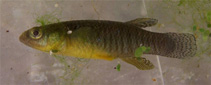
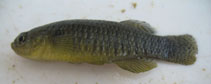
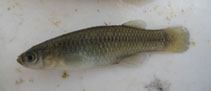
Μαλακές εδρικές ακτίνες: 11. Can be diagnosed from other species of Valenciidae, Fundulidae and Cyprinodontidae in Europe by the following characters: males bluish to greyish, possessing 1-14 darker bars narrower than or as wide as interspaces, not always distinct anteriorly, with iridescent spots; males with caudal fin hyaline to bluish, with or without dark posterior margin, and spots organized into 2-4 vertical rows; dorsal and anal fins of adult male not reaching caudal fin; 28-30 scales in midlateral series on body; anal fin usually with 11 rays; pectoral fin with 12-14 rays (Ref. 59043).
A short-lived species. Adults inhabit swamps, lowland water courses with little current, lagoons, springs and associated wetlands (Ref. 26100). Can tolerate salinity of up to 4 ppt in the wild and 46 ppt under laboratory conditions, but prefer freshwater. They feed mainly on insects, especially chironomids (Ref. 59043). Threatened due to the introduction of other species and water abstraction (Ref. 26100). Not a seasonal killifish. Difficult to maintain in aquarium (Ref. 27139).
Κύκλος ζωής και συμπεριφορά ζευγαρώματος
Γεννητική Ωρίμανση | Αναπαραγωγή | Γεννοβολία | Αβγά | Γονιμότητα | Προνύμφες
Eggs are scattered among fine-feathered water plants. Young hatch after 16-20 days (Ref. 2060). Eggs of about 2-mm in diameter are laid probably in batches (Ref. 59043).
Kottelat, M. and J. Freyhof, 2007. Handbook of European freshwater fishes. Publications Kottelat, Cornol and Freyhof, Berlin. 646 pp. (Ref. 59043)
Κατάσταση Κόκκινου Καταλόγου IUCN (Ref. 130435: Version 2025-2 (Global))
Απειλή για τον άνθρωπο
Harmless
Ανθρώπινες χρήσεις
αλιεία: χωρίς ενδιαφέρον; Ενυδρείο: Εμπορικό(ά)
Εργαλεία
Ειδικές εκθέσεις
Λήψη XML
Διαδικτυακές πηγές
Εκτιμήσεις βάσει μοντέλων
Δείκτης φυλογενετικής ποικιλότητας (Αναφ.
82804): PD
50 = 0.7500 [Uniqueness, from 0.5 = low to 2.0 = high].
Bayesian length-weight: a=0.00490 (0.00189 - 0.01269), b=3.14 (2.91 - 3.37), in cm total length, based on LWR estimates for this (Sub)family-body shape (Ref.
93245).
Τροφικό Επίπεδο (Αναφ.
69278): 3.2 ±0.4 se; based on size and trophs of closest relatives
Generation time: 1.1 ( na - na) years. Estimated as median ln(3)/K based on 1
growth studies.
Ελαστικότητα (Αναφ.
120179): Υψηλό, ελάχιστος χρόνος για διπλασιασμό πληθυσμού < 15 μήνες (tmax=3).
Ευπάθεια στην αλιεία (Ref.
59153): Low vulnerability (14 of 100).
🛈