Taxonomic Remarks
Type locality: Bikini Atoll, Marshall Islands.
ສະພາບແວດລ້ອມ: ສະພາບແວດລ້ອມ / ເຂດດິນຟ້າອາກາດ / ລະດັບຄວາມເລິກ / ຂອບເຂດການແຈກຢາຍ
ນິເວດວິທະຍາ
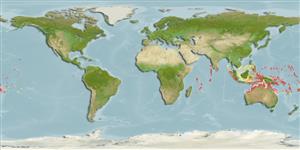
ສັດທະເລ ກ່ຽວກັນຫີນ; ລະດັບຄວາມເລິກ 0 - 30 m (Ref. 9710). Tropical; 12°N - 24°S, 55°E - 154°W (Ref. 5222)
Indo-West-Pacific: East coast of Africa to the Line Islands. Except for its occurrence along the African coast (Zanzibar, Tanzania to Ponta Zavora, Mozambique) it seems to be primarily an insular species, occurring at most (probably all) of the islands of tropical Indian and west-central Pacific. Not known from the Red Sea, Persian Gulf, Sri Lanka, Philippines, Taiwan, Japan, or Australian waters (however, it is found at Rowley Shoals off Western Australia).
ຄວາມຍາວໃນການເຕີບໂຕເຕັມຄັ້ງທໍາອິດ / ຂະໜາດ / ນ້ຳໜັກ / ອາຍຸ
ການຈະເລີນເຕັມໄວ: Lm ?, range 19 - ? cm
Max length : 47.5 cm TL ຕົວຜູ້/ບໍ່ມີເພດ; (Ref. 125599); ນ້ຳໜັກສູງສຸດທີ່ເຄຍຈັດພີມມາ: 1.5 kg (Ref. 125599)
ຄີ (ໜາມ)ແຂງຢູ່ຫຼັງປາ (ທັງໝົດ) : 11; ຄີຫຼັງຂອງປາ (ຄີອ່ອນ) (ທັງໝົດ) : 14 - 16; ຄີ(ໜາມ) ແຂງຢູ່ຄີກົ້ນປາ
ກຸ່ມປາກະດູກແຂງ
ຄວາມຖີ່ຂອງກຸ່ມຖ່າຍທອດພັນ
ປາທີ່ມີການເຄື່ອນຍ້າຍຈາກທະເລໄປຫານ້ຳຈືດ ແລະນ້ຳຈືດຫາທະເລ
ປາທີ່ມີການເຄື່ອນຍ້າຍຈາກທະເລແລະໄປໄຂ່ຢູ່ນ້ຳຈືດ
ຄີກົ້ນຂອງປາ
ສັດທີ່ມີກະດູກສັນຫັຼງ
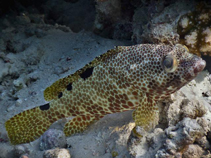
ການຖ່າຍທອດທາງກຳມະພັນຈາກພໍ່ແມ່ຫາລູກ: 3; ຄີກົ້ນຂອງປາ: 8. Preopercle rounded, with a shallow notch; the serrae are enlarged but covered with skin; upper edge of the operculum almost straight. The head and body mostly covered with close-set dark brown, olive, or reddish brown spots. Those on the dorsolateral parts of the head, body, and on median fins polygonal and close-set, with the interspaces forming a white reticulum. Those on the ventral portions are more rounded, more separated and often more reddish. Three dark blotches are often visible at the base of the dorsal fin and one forming a saddle blotch on the caudal peduncle. These blotches differentiates it from E. merra and E. quoyanus (Ref. 5222). Small conspicuous dark spots on snout and sometimes between or below the eyes (Ref. 37816).
Body shape (shape guide): fusiform / normal; Cross section: compressed.
Occurs in lagoon patch reefs, the upper slopes of channels, and reef margins (Ref. 1602). Carnivorous (Ref. 81697). Nothing has been published on its biology. Solitary (Ref 90102).
ວົງຈອນຊີວິດ ແລະພຶດຕິກໍາການຫາຄູ່
ການຈະເລີນເຕັມໄວ | ການສືບພັນ | ການວາງໄຂ່ | ໄຂ່ | ຄວາມດົກຂອງໄຂ່ປາ | ຕົວອ່ອນ
Heemstra, P.C. and J.E. Randall, 1993. FAO Species Catalogue. Vol. 16. Groupers of the world (family Serranidae, subfamily Epinephelinae). An annotated and illustrated catalogue of the grouper, rockcod, hind, coral grouper and lyretail species known to date. Rome: FAO. FAO Fish. Synop. 125(16):382 p. (Ref. 5222)
ສະຖານະພາບບັນຊີແດງຂອງ IUCN (Ref. 130435: Version 2025-2 (Global))
ໄພຂົ່ມຂູ່ຕໍ່ມະນຸດ
Harmless
ການນໍາໃຊ້ຂອງມະນຸດ
ການປະມົງ: ເປັນສີນຄ້າ; ຊະນິດປາທີ່ຖືກນຳໃຊ້ເຂົ້າໃນການຫາເພື່ອເປັນເກມກິລາ: ແມ່ນ
ເຄື່ອງມື
ບົດລາຍງານພິເສດ
ດາວໂຫລດ XML
ແຫຼ່ງອີນເຕີເນັດ
ການຄາດຄະເນໂດຍອີງໃສ່ແບບຈໍາລອງ
ອຸນຫະພູມທີ່ຕ້ອງການ (ເອກະສານອ້າງອີງ
123201): 26.1 - 29.3, mean 28.6 °C (based on 1392 cells).
ດັດຊະນີຄວາມຫຼາກຫຼາຍທາງຊີວະພາບ (ເອກະສານອ້າງອີງ
82804): PD
50 = 0.5000 [Uniqueness, from 0.5 = low to 2.0 = high].
Bayesian length-weight: a=0.01096 (0.00686 - 0.01753), b=3.06 (2.93 - 3.19), in cm total length, based on LWR estimates for this species & Genus-body shape (Ref.
93245).
ຊັ້ນເຂດຮ້ອນ (ເອກະສານອ້າງອີງ
69278): 3.8 ±0.6 se; based on size and trophs of closest relatives
ຄວາມຢືດຢຸ່ນ (ເອກະສານອ້າງອີງ
120179): ຂະໜາດກາງ, ປະຊາກອນຕຳ່ສຸດທີ່ໃຊ້ເວລາສອງເທົ່າ 1.4 - 4.4 ປີ (Preliminary K or Fecundity.).
ຄວາມສ່ຽງຕໍ່ການຫາປາ (Ref.
59153): Moderate vulnerability (38 of 100).
🛈
ທາດອາຫານ (Ref.
124155): Calcium = 37.5 [18.0, 76.4] mg/100g; Iron = 0.528 [0.290, 1.094] mg/100g; Protein = 18.5 [17.0, 19.9] %; Omega3 = 0.123 [0.077, 0.196] g/100g; Selenium = 27.3 [16.0, 48.5] μg/100g; VitaminA = 228 [63, 825] μg/100g; Zinc = 1.45 [0.99, 2.03] mg/100g (wet weight); based on
nutrient studies.