分類 / 名前
共通名の | 類義語 | Catalog of Fishes(部類, 種) | ITIS | CoL | WoRMS | Cloffa
板鰓亜鋼(サメとエイ類) (sharks and rays) >
Squaliformes (Sleeper and dogfish sharks) >
Dalatiidae (Sleeper sharks)
Etymology: Squaliolus: Diminutive of squalus (L.), a sea-fish, usually applied to sharks, referring to small size of S. laticaudus (See ETYFish); aliae: In honor of the Teng’s wife Huang A-li, for her “cordial help and constant encouragement” [originally spelled alii; since name honors a woman, aliae reflects the correct gender] (See ETYFish).
Eponymy: Huang A-li is the name of Teng’s wife. He named the shark, which was first caught inTaiwanese waters, after her “…for her continuous encouragement and assistance over the past 20-some years”. (Ref. 128868), visit book page.
環境:環境 / 気候帯 / 深さの範囲 / 分布範囲
生態学
海 深海浮遊性; 深さの範囲 200 - 2000 m (Ref. 6871). Deep-water
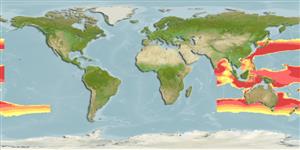
Western Pacific: Japan to Australia (off northwestern Australia and New South Wales).
初回成熟時の長さ / サイズ / 重さ / 年齢
成熟: Lm ?, range 15 - ? cm
Max length : 22.0 cm TL オス/雌雄の選別がない; (Ref. 6871)
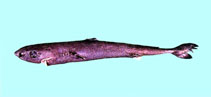
背面の脊椎 (合計) : 1; 肛門の骨: 0. The smalleye pygmy shark, Squaliolus aliae, is a very small dogfish (about 22cm) characterized by its small eye, with diameter about 46-70% of interorbital width, and with upper margin angular and chevron-shaped; upper lip with a pair of prominent lateral papillae (rarely indistinct) (Ref. 31367, 6871).Colour: dark brown to black, fin margins pale (Ref. 6871). Squaliolus are the only sharks with a fin spine on its first dorsal fin (spine sometimes concealed by skin) but not on its second dorsal fin; second dorsal fin long-based and low, about twice the length of the first dorsal fin base; first dorsal-fin base closer to pectoral fins than to pelvic fins; and caudal fin nearly symmetrical, with subterminal notch present (Ref. 247, 6871).
Body shape (shape guide): elongated.
Possibly the smallest living shark (Ref. 6871). Found near continental and island land masses (Ref. 31367). Feeds mainly on cephalopods and small midwater bony fishes (Ref. 6871). Probably makes diurnal vertical migrations from within 200 m of the surface at night down to about 2,000 m during the day (Ref. 6871). Ovoviviparous (Ref. 6871).
ライフサイクルと交尾行動
成熟 | 繁殖 | 放精 | 卵 | 生産力 | 幼生
Distinct pairing with embrace (Ref. 205). Ovoviviparous but litter size unknown (Ref. 6871). Males mature at 15 cm (Ref. 31367).
Last, P.R. and J.D. Stevens, 1994. Sharks and rays of Australia. CSIRO, Australia. 513 p. (Ref. 6871)
IUCNのレッドリストの状況は (Ref. 130435: Version 2025-2 (Global))
人間の用途
水産業: 興味がない
用具
特記事項
XMLをダウンロードして下さい
インターネットの情報源
モデルに基づく推定値
好ましい温度 (参照
123201): 4.6 - 10.1, mean 6.5 °C (based on 559 cells).
系統多様性指数 (参照
82804): PD
50 = 0.7510 [Uniqueness, from 0.5 = low to 2.0 = high].
Bayesian length-weight: a=0.00309 (0.00143 - 0.00669), b=3.14 (2.94 - 3.34), in cm total length, based on LWR estimates for this (Sub)family-body shape (Ref.
93245).
栄養段階 (参照
69278): 4.4 ±0.57 se; based on food items.
回復力 (参照
120179): 低い, 4.5年~14年の倍増期間の最小個体群 (Fec assumed to be <100).
漁業の脆弱性 (Ref.
59153): Low vulnerability (12 of 100).
🛈