Περιβάλλον: περιβάλλον / κλιματική ζώνη / εύρος βάθους / εύρος διανομής
Οικολογία
; Γλυκού νερού βενθοπελαγικό; pH range: 6.0 - 7.5; dH range: ? - 15; ποταμόδρομος (Ref. 51243). Subtropical; 22°C - 28°C (Ref. 1672)
Central and South America: southern Mexico to Paraguay, including Trinidad.
Μήκος κατά την πρώτη ωρίμανση / Μέγεθος / Βάρος / Ηλικία
Γεννητική Ωρίμανση: Lm 19.4, range 25 - ? cm
Max length : 76.0 cm TL αρσενικό/απροσδιόριστο; (Ref. 79585); μεγ. δημοσιευμένο βάρος: 1.2 kg (Ref. 79585)
Σύντομη περιγραφή
Κλείδες προσδιορισμού | Μορφολογία | Μορφομετρία
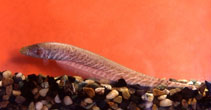
Facultative air-breathing (Ref. 126274); Aggressive (Ref. 27188). Inhabits turbid slow moving or standing waters (Ref. 11225). Found also in shallow edges of streams (Ref. 75964). Can survive when ditches, canals and small ponds dry out. (Ref. 11225). Feeds mainly at night on worms, insects (e.g. odonate larvae), shrimps, fish (preferably small characids, e.g. Ctenobrycon and Curimata) and plant matter (Ref. 7020; 10011). Oviparous (Ref. 205). Mouth brooding by males is observed in this species (Ref. 55570). Males provide parental care in nests excavated for eggs and larvae (Ref. 55570). Uses its long anal fin for locomotion. Can distinguish between a `friendly neighbor' and a potentially `threatening stranger' based on electric organ discharge (EOD) waveform alone (Ref. 10011). Relationship between EOD pattern and agonistic behavior in this species has been demonstrated (Refs. 10531, 10532, 10533). Shows auditory abilities, responding best to a frequency of 1000 Hz, with an upper limit above 5000 Hz (Ref. 10831). Also responds to vibratory stimuli (water waves: 125-250 Hz) with transient increase in EOD rate (Ref. 10834). 'Prefers' temperatures of 24-25°C (Ref. 10836).
Κύκλος ζωής και συμπεριφορά ζευγαρώματος
Γεννητική Ωρίμανση | Αναπαραγωγή | Γεννοβολία | Αβγά | Γονιμότητα | Προνύμφες
Parental care is provided by the male. The male sits on a depression with its anal fin expanded horizontally guarding a cluster of larvae. More larvae are spread out in leaf litter up to 2 m away (Ref. 55570).
Campos-da-Paz, R., 2003. Gymnotidae (Naked-back knifefishes). p. 483-486. In R.E. Reis, S.O. Kullander and C.J. Ferraris, Jr. (eds.) Checklist of the Freshwater Fishes of South and Central America. Porto Alegre EDIPUCRS, Brasil. (Ref. 36692)
Κατάσταση Κόκκινου Καταλόγου IUCN (Ref. 130435: Version 2025-2 (Global))
Απειλή για τον άνθρωπο
Harmless
Ανθρώπινες χρήσεις
αλιεία: χωρίς ενδιαφέρον; Ενυδρείο: Εμπορικό(ά)
Εργαλεία
Ειδικές εκθέσεις
Λήψη XML
Διαδικτυακές πηγές
Εκτιμήσεις βάσει μοντέλων
Δείκτης φυλογενετικής ποικιλότητας (Αναφ.
82804): PD
50 = 0.5000 [Uniqueness, from 0.5 = low to 2.0 = high].
Bayesian length-weight: a=0.00380 (0.00293 - 0.00494), b=2.92 (2.84 - 3.00), in cm total length, based on LWR estimates for this species (Ref.
93245).
Τροφικό Επίπεδο (Αναφ.
69278): 3.6 ±0.56 se; based on food items.
Generation time: 3.6 ( na - na) years. Estimated as median ln(3)/K based on 2
growth studies.
Ελαστικότητα (Αναφ.
120179): Μεσαίο(α), ελάχιστος χρόνος για διπλασιασμό πληθυσμού 1,4 - 4,4 έτη (tm=2).
Ευπάθεια στην αλιεία (Ref.
59153): Moderate vulnerability (37 of 100).
🛈
Θρεπτικά συστατικά (Ref.
124155): Calcium = 51.3 [21.6, 112.8] mg/100g; Iron = 0.975 [0.510, 1.782] mg/100g; Protein = 18.3 [17.1, 19.6] %; Omega3 = 0.33 [0.13, 0.83] g/100g; Selenium = 25.6 [9.8, 63.4] μg/100g; VitaminA = 21.8 [6.9, 67.1] μg/100g; Zinc = 1 [1, 1] mg/100g (wet weight);