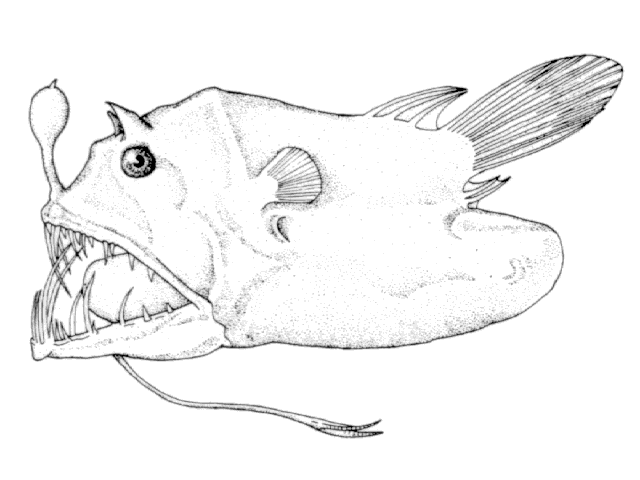
| Linophrynidae (Leftvents) |
Deprecated: strlen(): Passing null to parameter #1 ($string) of type string is deprecated in /var/www/html/FieldGuide/FieldGuideSummary.php on line 600
Deprecated: strlen(): Passing null to parameter #1 ($string) of type string is deprecated in /var/www/html/FieldGuide/FieldGuideSummary.php on line 616
2.9 cm SL (male/unsexed); 27.5 cm SL (female) |
|
bathypelagic; marine; depth range 0 - 1000 m |
| North Atlantic, from off Iceland, and East and West Greenland; extending farther south from off Newfoundland to Madeira. |
|
Dorsal soft rays (total): 3-3; Anal soft rays: 2-3. Metamorphosed females distinguished by the following characteristics: escal bulb with conical distal prolongation bearing short, stout filaments; posterior escal appendage small and conical; absence of additional escal appendages; barbel with single stem, divided distally into a pair of compressed pointed branches, each bearing a series of photophores on one edge and with a pair of short, simple lateral branches on distal half of stem, each with few photophores at distal tip; parasitic males with pointed sphenotic spines (Ref. 86949). |
| Caught in high latitudes by commercial bottom trawls at about 300-600 m, with open pelagic trawls fished at maximum depth of 1000 m (Ref. 86949). |
|
Least Concern (LC); Date assessed: 04 February 2009 Ref. (130435)
|
| harmless |
Source and more info: www.fishbase.org. For personal, classroom, and other internal use only. Not for publication.