| Family: |
Salmonidae (Salmonids), subfamily: Coregoninae |
| Max. size: |
Deprecated: strlen(): Passing null to parameter #1 ($string) of type string is deprecated in /var/www/html/FieldGuide/FieldGuideSummary.php on line 600
Deprecated: strlen(): Passing null to parameter #1 ($string) of type string is deprecated in /var/www/html/FieldGuide/FieldGuideSummary.php on line 616
36 cm TL (male/unsexed); 48 cm FL (female) |
| Environment: |
pelagic-neritic; freshwater; brackish; marine, anadromous |
| Distribution: |
North America: Alaska. May occur in Chukotsk and Kamchatka regions of Siberia. |
| Diagnosis: |
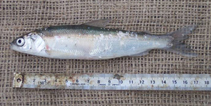
Dorsal spines (total): 0-0; Dorsal soft rays (total): 11-13; Anal spines: 0-0; Anal soft rays: 12-14; Vertebrae: 62-65. Distinguished by the pale, almost colorless pelvic and pectoral fins and the smaller number of gill rakers on the lower portion of the first gill arch (Ref. 27547). Dorsal rather high and falcate; pelvic fins with axillary process (Ref. 27547). Generally brownish to dark green on back; silvery on lower sides and belly; anal, pelvic and pectoral fins pale; caudal and dorsal fins dusky (Ref. 27547). |
| Biology: |
Found near river mouths and brackish lagoons (Ref. 5723). Adults make extensive migrations related to spawning (Ref. 27547). They feed on invertebrates and cottids (Ref. 27547). Apparently does not feed during its spawning runs (Ref. 27547). Some populations anadromous (Ref. 96339). |
| IUCN Red List Status: |
Least Concern (LC); Date assessed: 30 June 2020 Ref. (130435)
|
| Threat to humans: |
harmless |
Source and more info: www.fishbase.org. For personal, classroom, and other internal use only. Not for publication.